
The same place can do different jobs for different people
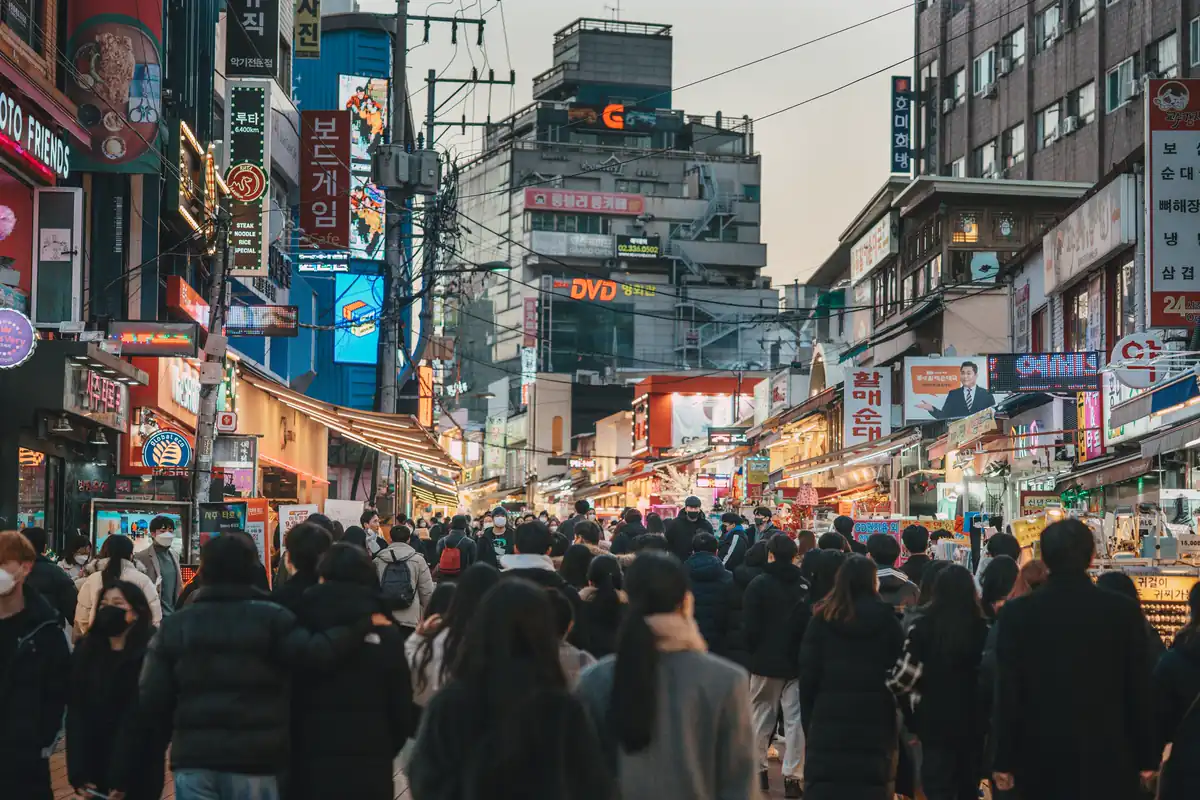
Anyone who spends time around Korea travel advice notices the gap fairly quickly. Koreans will look at a neighborhood, restaurant, or landmark and say it feels too touristy. Foreign visitors may look at that same place and decide it is exactly where they want to go. The reverse happens too. Places that locals praise as truly good can feel flat, inconvenient, or strangely hard to enjoy for someone visiting Korea for the first time.
People often talk about this as if one side knows the real Korea better. That reading is usually too simple. Koreans and foreign visitors are not always asking the same thing from a place. A local may care about whether somewhere fits naturally into an ordinary week. A traveler may care about whether a place can deliver a strong and readable Korea feeling without too much friction. Once the job changes, the place that feels attractive changes too.
Local places often expect you to adjust first
A local place usually grows inside a system that nearby people already understand. The menu does not need much explanation. The service can stay brisk. The waiting order, the table rhythm, the café mood, and the unspoken small rules can all remain largely invisible because regular users already know how to move through them.
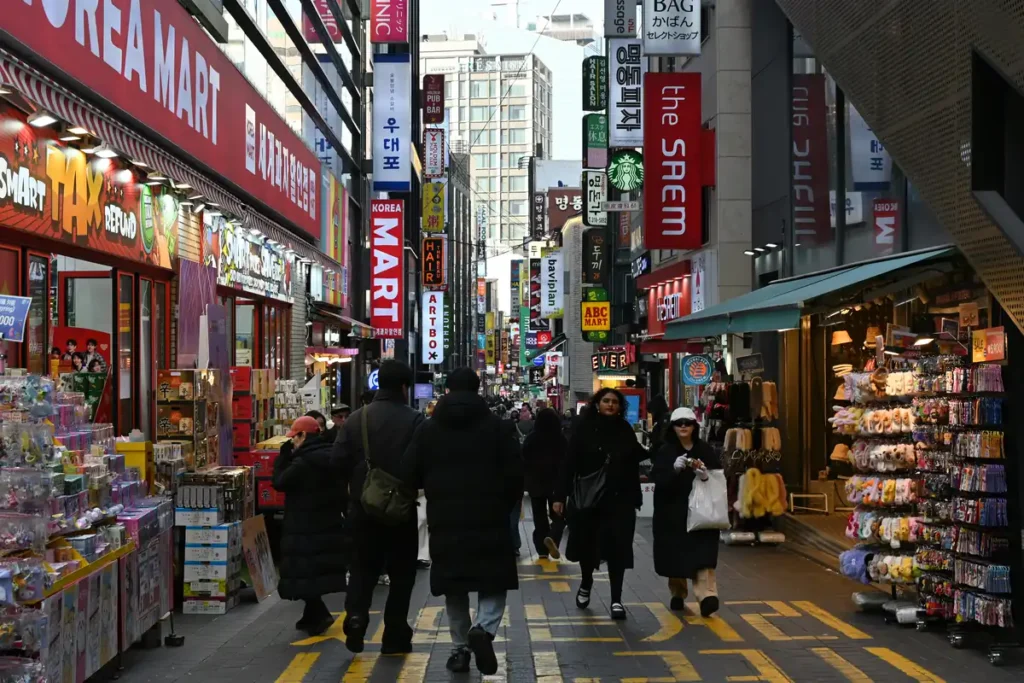
That does not automatically make the place more honest or more valuable. It does mean the place was not built around the needs of a newcomer. A traveler may have to do more work on arrival. The language may be harder. The ordering flow may feel less intuitive. The atmosphere may feel cooler than expected. Even the food may ask more from someone who is still learning how Korean meals are structured.
This is part of what gives local places their appeal. They can preserve a Korea that has not been softened too much for outside eyes. At the same time, the same quality can raise the entry barrier. A place can feel richly local and still be a poor first fit for a short-term visitor.
Tourist places are often Korea after one round of translation
Tourist areas work on different terms. They are shaped with outsiders in mind, whether through design, curation, or simple repetition. They help new arrivals understand where to stand, what to look at, how to move, and why the place matters. The result is not necessarily a fake Korea. More often, it is Korea arranged in a form that a first-time visitor can read faster.
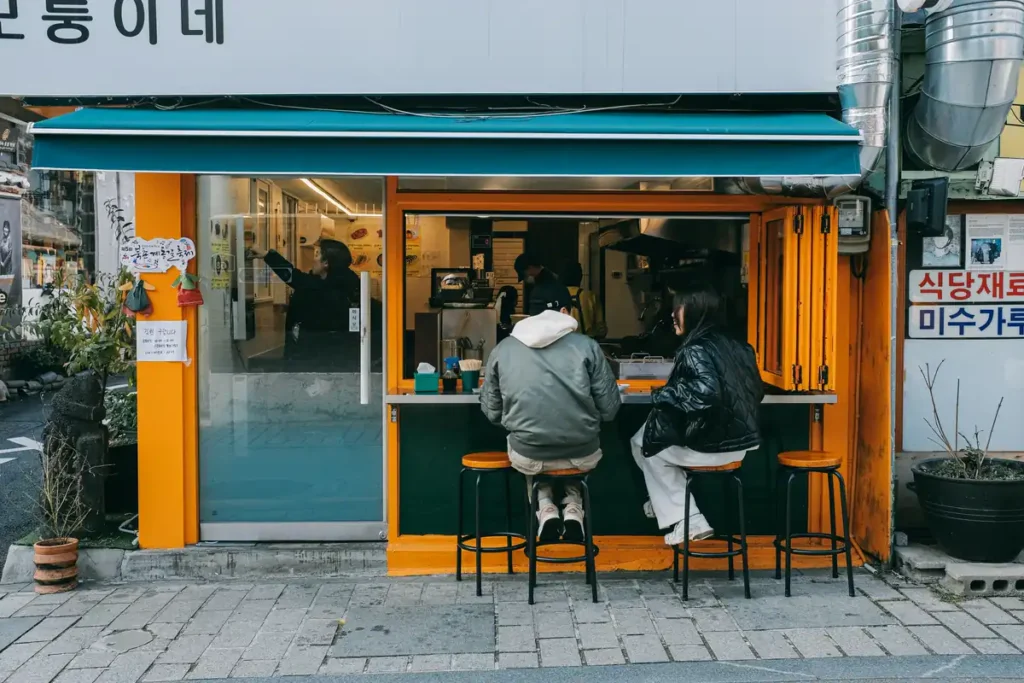
That is part of the reason these places stay popular. A palace, Myeongdong street, Bukchon lane, Han River park, or Namsan viewpoint can be entered with limited background knowledge. They are easier to explain, easier to photograph, easier to connect to a short itinerary, and easier to remember. What feels obvious to a Korean can feel wonderfully clear to someone arriving from outside.
For a visitor with limited time, that clarity has real value. The point is not that tourist places are deeper than local ones. The point is that they can be more useful at the beginning. They often deliver a strong Korea feeling before the traveler has learned enough to decode the country in less translated spaces.
That translation has a price
Places adjusted for outsiders can also lose something. Prices can rise. Service can flatten out. A district built around one-time visitors may care more about smooth turnover than long-term depth. The mood may become easier to enter but less textured once you are inside it.
Travelers notice this all the time. Some places feel polished yet thin. Some meals feel approachable but slightly toned down. Some shops feel efficient without being especially memorable. The more a place is shaped to work for almost anyone, the more likely it is to shed a little of the friction that once gave it character.
That does not make the place worthless. It only means convenience and compression are part of the package. A tourist area may still be worth visiting, especially if the traveler knows what kind of version of Korea it is offering.
Food makes the difference easy to see
The contrast becomes sharper around food. Local restaurants often rely on familiarity more than explanation. A strong smell, a dense menu, a blunt service rhythm, or a texture that feels ordinary to Koreans may feel heavy to someone who is still learning the country through a few short meals.
Tourist-facing food tends to be easier to absorb. It often has to work for people who do not know the dining logic yet, who may not read Korean, and who may not want their first meal to turn into a small test. That pressure changes what gets served and how it gets framed. Stronger edges may soften. Menus may become easier to decode. Certain flavors may be pushed toward the center rather than the extremes.
Visitors sometimes treat that as proof that tourist-area food is less real. The more useful reading is that it has been adjusted to serve a different stage of the journey. In the first few days of a trip, that softer landing can be exactly what makes Korean food enjoyable rather than stressful. A gentler version of Korea can still be a good entrance into Korea.
For beginners, tourist places are often a smart first step
A traveler with limited time does not always need the hardest version of local life first. A short trip usually works better when the first few experiences have a low chance of failure. The place should be easy to access, simple to understand, and memorable without too much effort. Tourist areas are often strong at exactly that.
There is no special depth in forcing yourself into difficult local spaces before you are ready for them. That move can produce tiredness more easily than insight. Someone with weak language confidence, little time, and a tightly packed schedule may come away with more friction than reward. Under those conditions, a tourist area is not a shallow compromise. It can be the right entrance for the stage you are in.
Seen that way, tourist places are not the opposite of meaningful travel. Many of them work well because they give a visitor enough structure to start building confidence inside the country.
A translated version of Korea is still only one version
The mistake comes later, when a traveler starts treating that readable version as the whole country. Tourist places can open the door, but they cannot carry the entire weight of Korea on their own. They are edited spaces. They help the country arrive more clearly. They do not always show the full density of how life feels once the country stops translating itself for you.
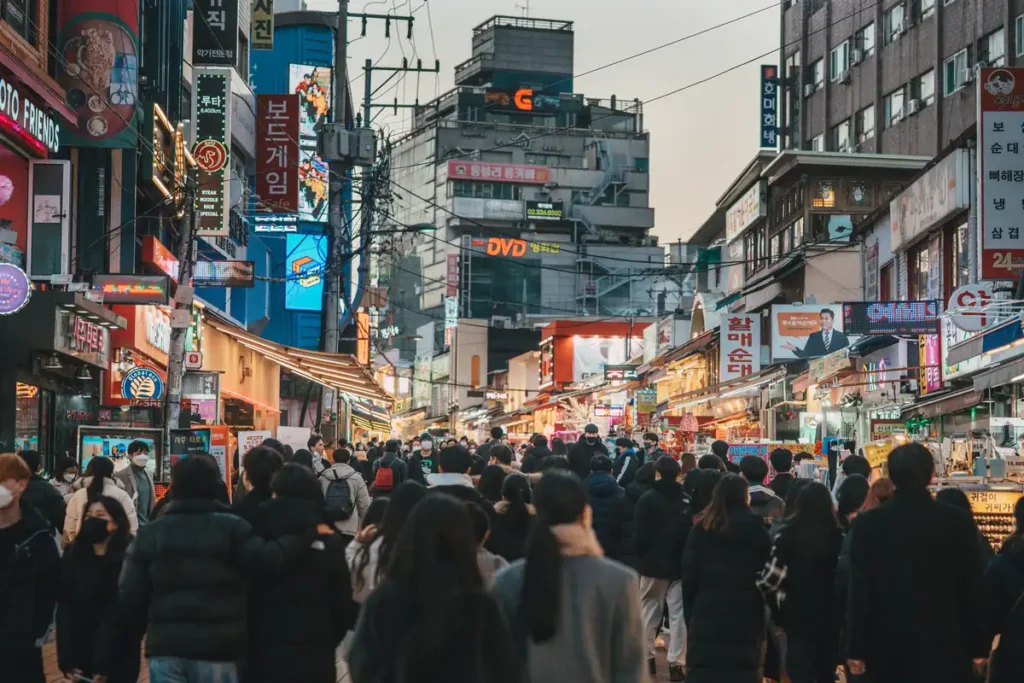
That fuller layer may include brisker service, less explanation, stronger flavors, more awkward pauses, or habits that only look natural to people who already belong there. Those elements are not always comfortable, but they often reveal more. They show how places work when the visitor is no longer the main character in the room.
A trip does not become better by rejecting tourist places out of pride. It becomes better when the traveler understands which version of Korea they are looking at and what that version is designed to do.
There is also a limit to how much a country should have to bend
Visitors do need help. Signs matter. Translation matters. Friendly explanation matters. Still, a trip becomes thinner when someone expects every place in the country to meet them on fully English-speaking, fully intuitive terms. At that point, the country starts to feel less like a place with its own shape and more like a service surface.
Travel usually asks for movement in both directions. The country meets you part of the way. You move part of the way toward the country. A local place often makes that balance visible. You may not understand every detail, but you begin to notice why the place feels harder to enter and why that difficulty exists. That kind of attention changes the experience. It stops being a simple judgment about whether the service was good enough and becomes a closer reading of how the place is actually meant to work.
The question is not which place is more real
The more useful question is where you are standing when you enter it. Koreans are already inside the system, so unadjusted places can still feel comfortable, efficient, and worth returning to. Foreign visitors are approaching from outside, so translated places often make more sense at the beginning.
Local places are often the Korea you have to move toward. Tourist places are often the Korea that has already moved a little toward you. Neither side needs to cancel the other. They answer different needs, and many travelers will use both at different points of the same trip.
Once that becomes clear, the gap between local taste and tourist taste looks much less mysterious. It stops being a contest over who knows the real Korea and starts looking more like a difference in timing, position, and purpose. That shift usually makes the trip feel less defensive and much more rewarding.