
Kindness does not always end as lightly as it begins
Most people think of kindness as something good. Giving directions, holding a door, or offering a small favor usually feels like goodwill or basic manners. Korea is no different in that sense. A brief and light act of kindness often leaves a good impression. If a stranger shows a small kindness, people can simply take it as a polite and pleasant moment.

But in Korea, some acts of kindness do not end there. They can begin to feel heavier than the action itself. The problem is not kindness. The problem begins when kindness enters a relationship with more weight than the relationship itself can comfortably hold.
In Korea, kindness can be read as a sign of relationship
In Korea, an act of goodwill is not always read as a single action that ends in the moment. Sometimes it is understood as a sign that the relationship between two people has moved forward a little. Nobody may say that out loud, but the feeling can still be there. A favor, a gift, or a generous gesture can quietly change the meaning of the relationship.
That is why receiving kindness can sometimes feel more complicated than simply being grateful. What arrives is not only the act itself, but also the sense that the relationship now carries a little more weight than before.
Return gestures are less a rule than a social atmosphere
That does not mean Korea has a strict rule that every act of kindness must be repaid in equal measure. In real life, people can simply say thank you and let the moment pass. Even an empty dish can be returned empty. Nobody is likely to accuse you of doing something formally wrong.
But emotionally, it often does not feel that simple. Once something is given, people naturally start thinking about what they should give back, whether they should respond somehow, or whether doing nothing makes the relationship feel uneven. So the pressure does not come mainly from a fixed rule. It comes from a shared atmosphere. Return gestures are often not an obligation on paper, but they are still something people quietly think about.
Sharing rice cakes used to be one way of starting a relationship
An older Korean custom shows this clearly. When people moved into a new home, it was common to share rice cakes or a small snack with neighbors. On the surface, this looked like a simple act of friendliness. In reality, it also worked as a way of saying, “Let us begin this relationship well.”
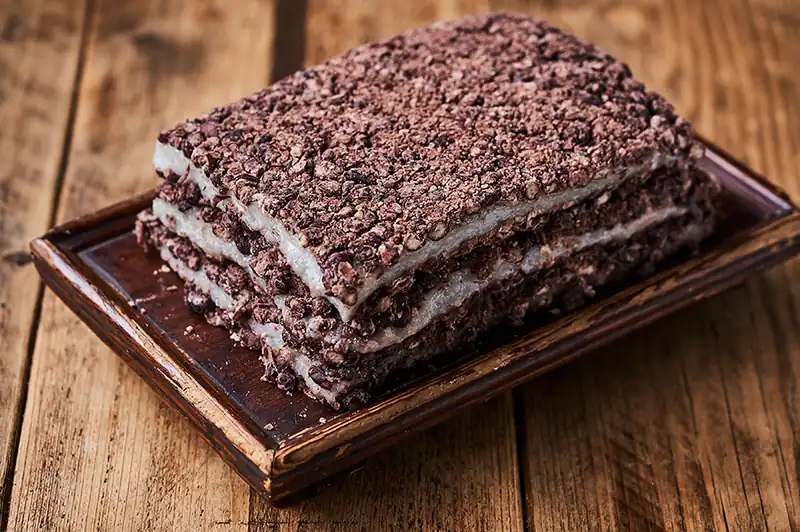
And in older social habits, the exchange often did not end there. The plate that arrived with rice cakes was not always sent back empty. Something small might be placed on it and returned. It did not have to be expensive. The point was not exact repayment. The point was that the relationship did not end with one side giving and the other side remaining empty-handed. In that sense, the rice cake was not just food. It was part of a way of opening a relationship through exchange.
The burden grows when the relationship itself is still unclear
The difficulty appears when this cultural feeling enters a relationship that is not yet fully settled. If two people are already close, exchanging things can feel natural. But when the relationship is still vague, generosity can suddenly feel heavier than expected.
The receiver may not dislike the kindness at all. The discomfort comes from not knowing how the gesture should now be understood. Is it just kindness. Is it the beginning of a closer relationship. Does it now ask for a response of similar weight. This is where kindness can start to feel burdensome.
A container of kimchi can carry more than food
This becomes even clearer with something like homemade kimchi. In Korea, it is not unusual for someone to bring over a container of kimchi. It can feel warm, generous, and caring. But if the relationship between the two people is still uncertain, that container may arrive with more weight than the receiver expected.
The reason is simple. A container of kimchi is not just food. It carries time, labor, household taste, and the feeling that someone decided to care at a meaningful level. That is why the receiver may feel gratitude and pressure at the same time. The burden does not come from the price. It comes from the amount of care already built into the gesture.
That is why the same kindness can feel different in Korea
In the end, kindness in Korea is not always judged by the act alone. It is also read through timing, distance, and the state of the relationship. A small act may stay light and simply feel polite. But a larger act, especially between people whose relationship is still undefined, can begin to feel like more than kindness. It can feel like the start of a social weight that now needs to be carried somehow.
That is why the same kindness can feel burdensome in Korea. Not because kindness is unwelcome, and not because return is enforced like a strict rule, but because Korean social life often lets kindness grow into relationship. And once that happens, even gratitude can arrive with the quiet question of what should come next.