
Why so many Western travelers start out skeptical
A lot of Western travelers arrive in Korea with the same instinct already in place. If a place is part of a chain, it must be the less interesting option. Less local, less memorable, less worth the time. Maybe useful when you are tired. Maybe fine when you need something easy. But not the kind of place you imagine when you picture a meaningful food experience in another country.
That instinct is not hard to understand. In many places, franchises really do feel like the backup plan. They are where people go when they want consistency more than surprise. Useful, yes. Memorable, not always. So it makes sense that many travelers bring that same assumption with them to Korea.
Why that instinct does not always hold up here
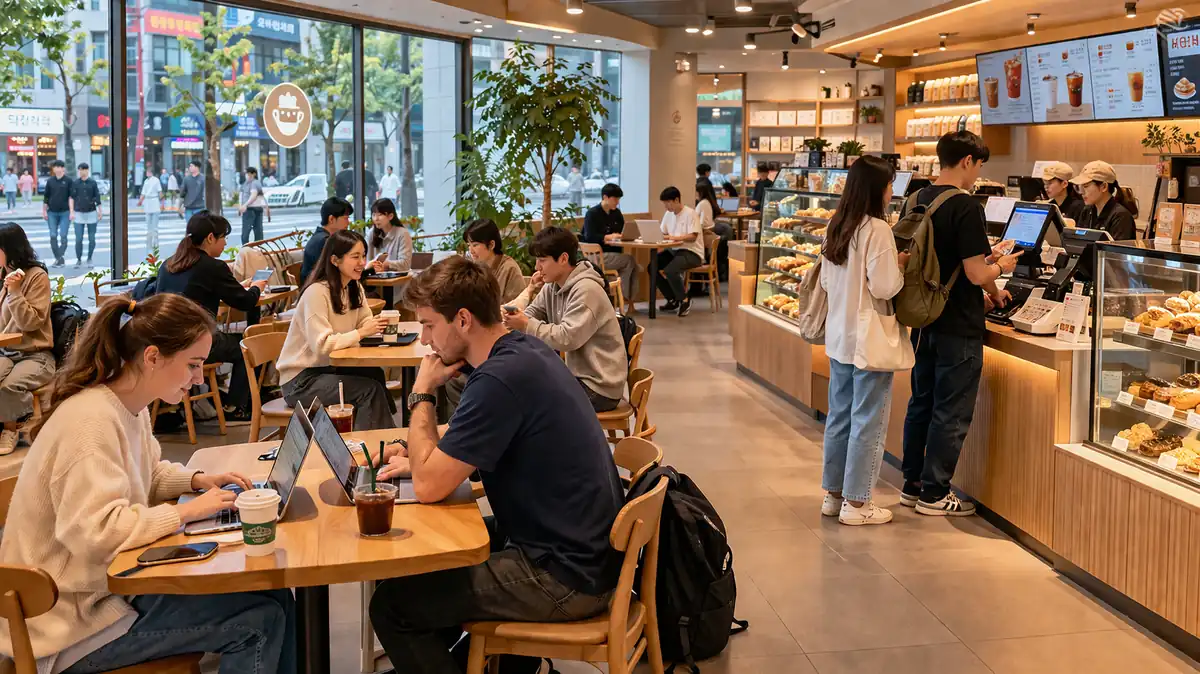
Korea changes the feeling of a franchise a little. Chains here do not always sit outside local life. Very often, they are woven straight into it. They are where people grab coffee before work, pick up bread on the way home, sit for hours with a laptop, meet a friend after dinner, or order chicken late at night without treating it like an event.
That does not mean every chain is interesting, and it definitely does not mean independent places matter less. It just means that in Korea, a franchise is not automatically the opposite of something local. Sometimes it is one of the most ordinary and honest parts of the scene.
In Korea, chains often feel less like a fallback and more like part of the landscape
You notice this quickly once you start moving through the country. Around stations, office districts, apartment neighborhoods, shopping streets, and university areas, chain cafés and chain food spots are not rare interruptions. They are part of the visual rhythm of everyday life. Coffee chains, bakery chains, kimbap chains, chicken brands, dessert chains, and casual meal spots keep showing up because people actually use them constantly.
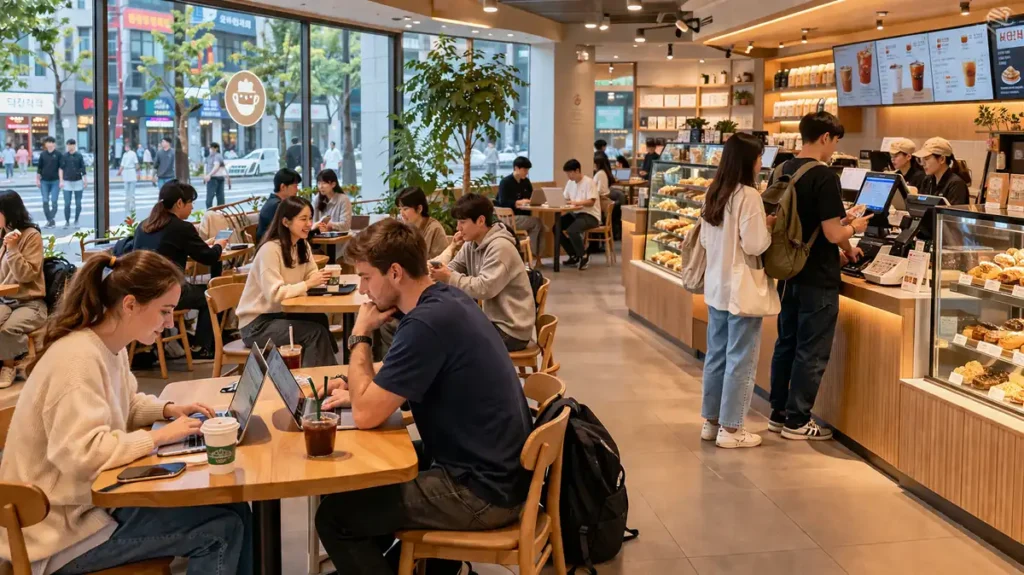
That changes how a franchise reads. It stops feeling like the generic substitute and starts feeling more like part of the background. If you avoid chains completely in Korea, you are not just skipping convenient places. You are also stepping around one of the easiest ways to see how people actually eat and move through a normal day.
Chains in Korea do not just follow trends. They often help push them.
This is another place where Korea feels different. In many countries, chains succeed by repeating what already works. In Korea, they still do that, but they also move fast. Seasonal drinks, limited desserts, new flavor combinations, collaborations, short-lived crazes, products designed to be photographed, and products designed to spread quickly all fit naturally into chain culture here.
Small local places can be excellent, but many of them stay steady for years. That steadiness can be part of their charm. Chains move differently. They can take a taste, a texture, or an idea and make it suddenly visible everywhere. In Korea, that speed matters.
Tanghulu shows how that works
Tanghulu is a good example. It did not begin as a Korean food. It came from a Chinese fruit candy tradition. But once it entered Korea, it did not stay in that original frame for long. It got pulled into Korean trend culture, and chain-style expansion helped push it much further than a niche imported snack usually goes.
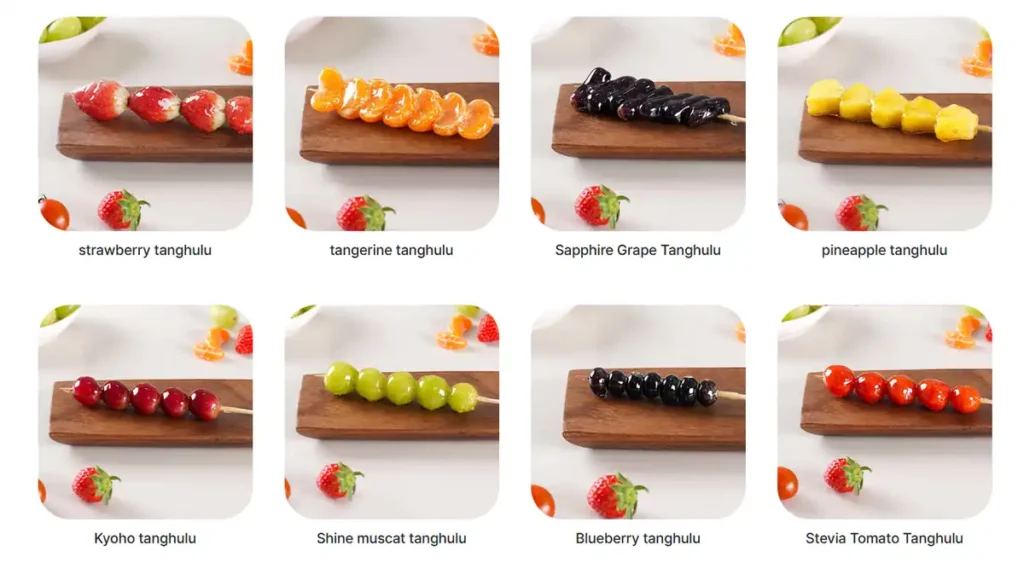
Part of the appeal was the look. Part of it was the sharp crack of the sugar shell. Part of it was how easy it was to carry, film, post, and buy on impulse. When something like that starts spreading through chain logic and fast visibility, it stops feeling small. It starts feeling like a national obsession for a while. That is one of the things Korean franchise culture can do very well. It can take something from outside, reshape how people consume it, and make it feel suddenly native to the moment.
Chicken makes the point even clearer
Korean fried chicken may be the easiest place to see this difference. To many Western travelers, a chicken chain sounds like the most ordinary fast-food category imaginable. In Korea, it is not that simple. Chicken franchises have spent years shaping what people expect from fried chicken in terms of crunch, sauce, seasoning, side pairings, and even the social habits built around it.
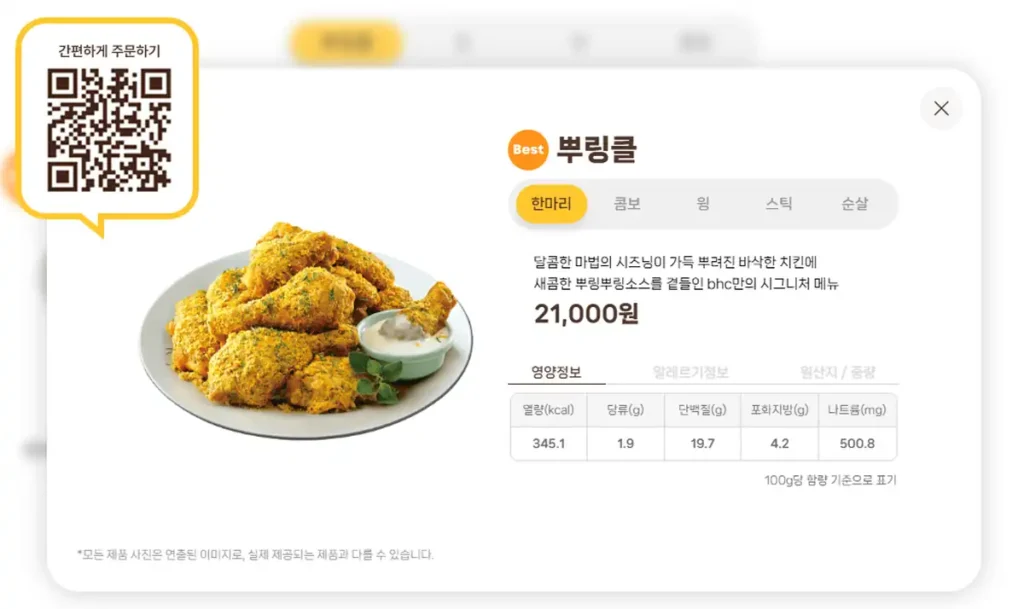
The roots may connect back to American-style fried chicken, but the Korean version did not stay there. The coating often became thinner and crispier. Double-frying helped create a lighter, sharper texture. Sauced versions became more expressive. Powder seasonings, soy-based styles, sweet-spicy glazes, and all kinds of variations kept widening what the category could be.
What matters is not just that these versions exist. It is that franchise brands helped spread them and normalize them. In Korea, a chicken chain is not simply repeating a fixed model. It has often been one of the places where the model keeps changing.
That is one reason chains are not automatically read as cheap or low-status
Western travelers sometimes bring another assumption with them too. If a place is part of a chain, maybe locals only go there because it is cheap. In Korea, that reading is often too simple. Some chains are budget-oriented, of course, but many are chosen because they are familiar, comfortable, predictable, and easy to use in the middle of an ordinary day.
Cafés make this especially obvious. Korean café chains are not all doing the same job. Some are for quick coffee. Some are for studying. Some are for long conversations. Some lean into desserts. Some feel more polished than others. They are not all premium, and they are not all cheap. They just sit naturally inside daily life in a way many visitors do not expect at first.
Food makes the difference easier to notice
This is also why the local-versus-chain divide can look different in Korea than it does elsewhere. A local place may carry stronger edges. The seasoning may hit harder. The menu may assume more background knowledge. The service may feel more matter-of-fact. If you already know the culture, those things can feel natural, even reassuring.
A chain often works with a wider audience in mind. The food may be easier to read, the menu easier to navigate, the experience easier to repeat. That can make it feel less intense, but it can also make it more revealing in another way. You start to see what has already become widely legible inside Korea itself, what has moved from niche preference into mainstream habit.
What this says about Korean food culture now
A lot of travelers still use a narrow idea of what counts as local. They imagine the most local place must be small, hidden, old, and untouched by brand logic. Korea certainly has places like that, and some of them are wonderful. But that is not the whole story anymore.
Contemporary Korean food culture also includes chain cafés, dessert brands, bakery chains, chicken franchises, and fast-moving casual meal spots. These are not side notes. They shape cravings, visual trends, everyday routines, and the speed at which new tastes become normal. If you want to understand not just the past of Korean food culture but its present tense, chains tell you more than many travelers expect.
What this does not mean
None of this means chains are always the better choice. Some of the meals people remember most in Korea will still come from older specialist shops, independent restaurants, and neighborhood places with a strong identity of their own. Those places matter, and travelers should absolutely leave room for them.
Still, it helps to let go of the idea that chains are automatically the dull option. In Korea, they can be ordinary and revealing at the same time. They can show how trends spread, how taste gets softened or sharpened for a wider audience, and how daily life actually looks right now.
Final thoughts
This is probably the part many first-time visitors do not expect. A franchise in Korea may not give you the romance of finding a tiny backstreet place with no English menu and no sign outside. But it can still show you something real. Sometimes it shows you what people are eating now. Sometimes it shows you how a trend moves. Sometimes it captures the pace of ordinary life better than a place trying very hard to look traditional ever could.
So no, franchises do not mean exactly the same thing here. In Korea, they often feel less like a compromise and more like part of the picture.