
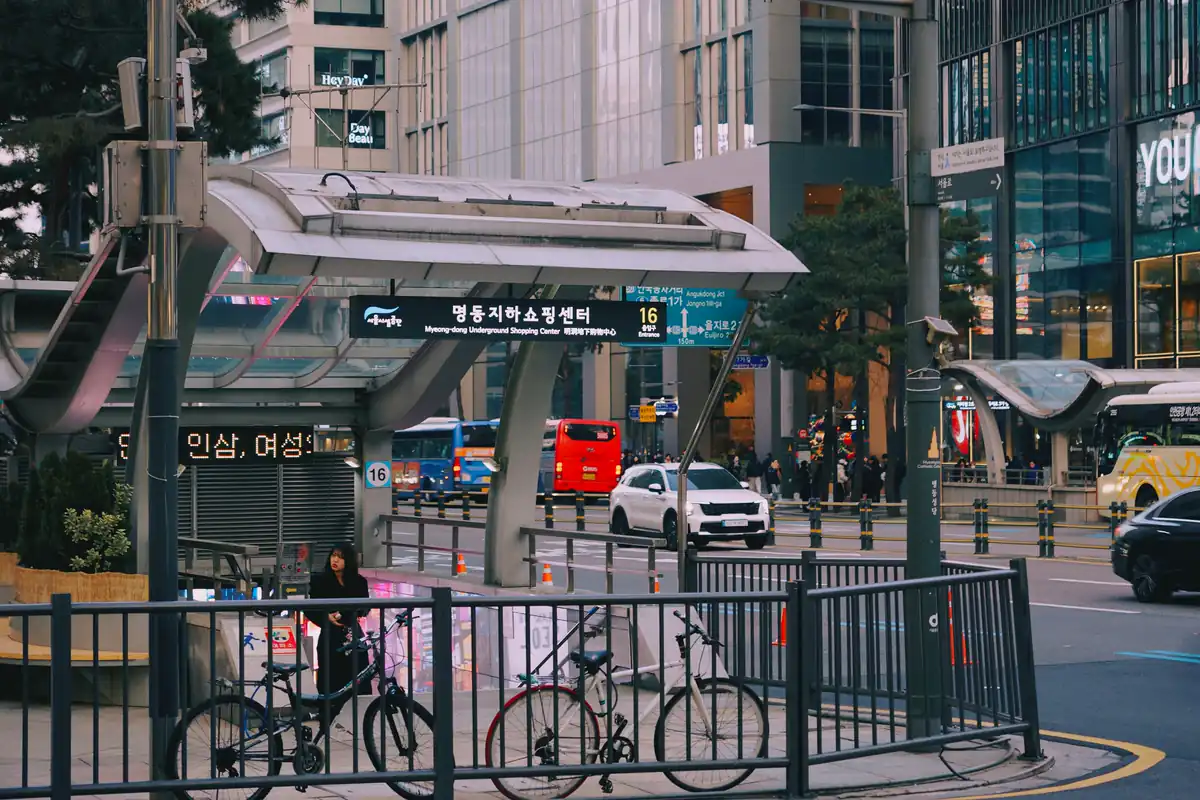
You do not need to understand the whole subway map first
The Korean subway can look like too much when you first see it. There are a lot of lines, a lot of transfer stations, and a lot of names you do not know yet. For many first-time visitors, the map itself is enough to make the whole system feel harder than it really is.
But the subway is easier once you stop thinking of it as something you have to fully understand before using. You do not need the whole picture first. You only need enough to make the next move.
Even Koreans do not know the full map by heart
One thing that helps right away is knowing that most Koreans do not walk around carrying the entire subway map in their heads either. People usually know the lines they use often. When they need to go somewhere unfamiliar, they check an app just like everyone else.
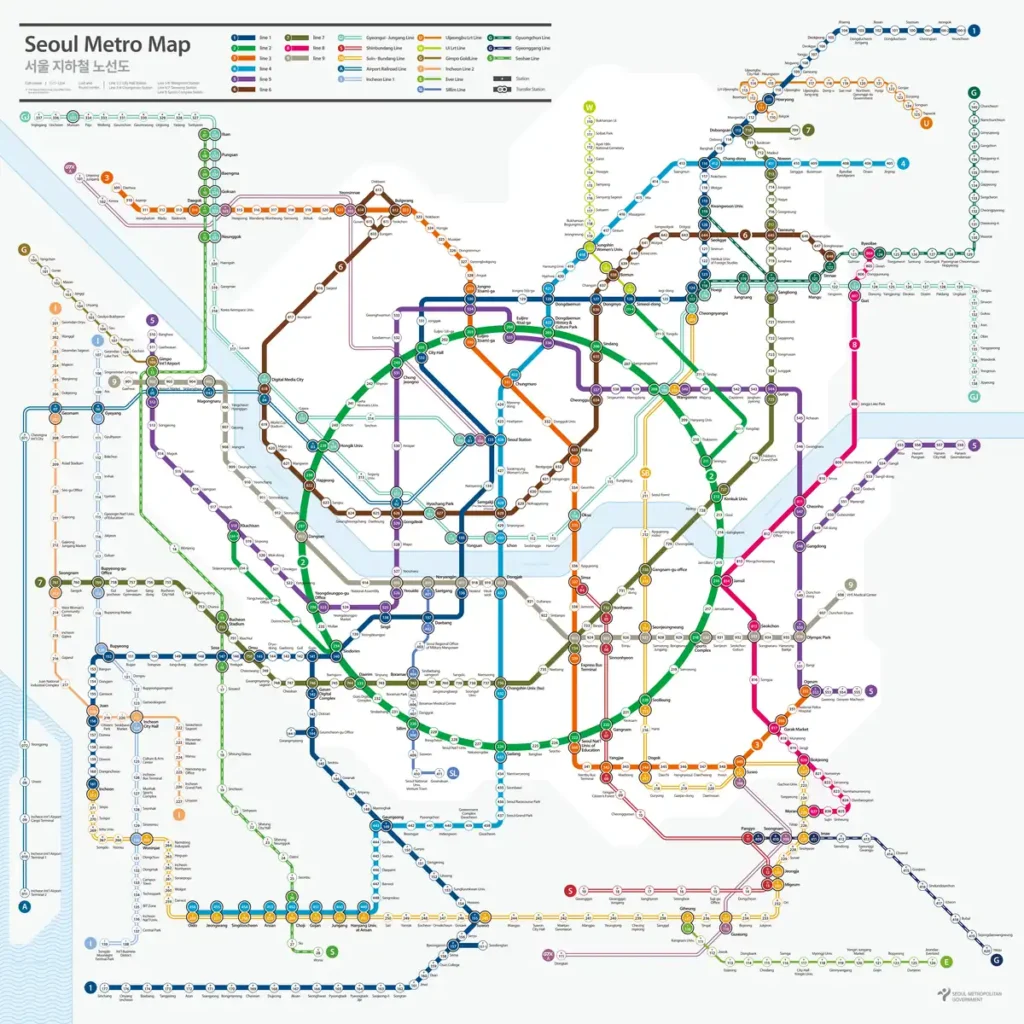
That matters because it lowers the pressure. You are not behind just because the system looks big. You are using it the same way most people do, one trip at a time.
If the map looks dense, that usually means you can get almost anywhere
The subway feels dense because it is dense. At first that can look messy. In practice, it usually means the network reaches almost everywhere you are likely to go in the city.
If there is a place you want to visit, the easiest move is not to stare at the whole map and hope it starts making sense. Open the map, find the station closest to your destination, check which exit is nearest, then look at where you are and which station you should enter from. Once you know those few things, more than half the problem is already solved.
The app matters more than the map
For a first-time visitor, the app is usually more useful than the wall map. It tells you which direction to take, how many stops are left, where to transfer, and which exit makes the most sense. That is much more practical than trying to read the whole system as one large diagram.
The better habit is simple. Let the app give you the route, then follow it step by step. You do not need to decode the whole city before you start moving through it.
If you have internet, the app can handle most of the stressful parts
If your phone has internet access, the subway becomes much easier very quickly. Transit apps can track your location, show how many stops remain, tell you where to get off, and walk you through transfers without forcing you to keep checking every sign around you.
That means you do not have to keep looking outside or worry the whole time about missing your stop. A lot of the work is already being done for you. For a first-time visitor, that changes the experience completely.
If timing matters, the subway is usually the safer choice
One of the biggest advantages of the subway is predictability. In the city, it is often the easiest way to move on time. Buses can be useful and flexible, especially when they get you closer to the final destination, but they also depend much more on traffic.
If you have a reservation, a timed entry, or anything else that would get annoying if you arrived late, the subway is usually the safer option. It may not always feel like the shortest route, but it often feels like the most stable one.
That does not mean the subway is always comfortable
The subway is good for time management, but it can still feel rough if you catch it at the wrong time. Rush hour is the obvious example. During commuting hours, trains are fuller, people move faster, and the whole ride feels less forgiving.
If you are traveling for leisure, it usually makes sense to avoid commuter peaks when you can. The route itself may be the same, but the experience can feel completely different depending on the hour.
The exit number can matter more than the station name
A lot of first-time visitors think the hard part ends once they arrive at the correct station. In Korea, that is not always true. Some stations are large enough that the wrong exit can leave you walking much longer than expected.
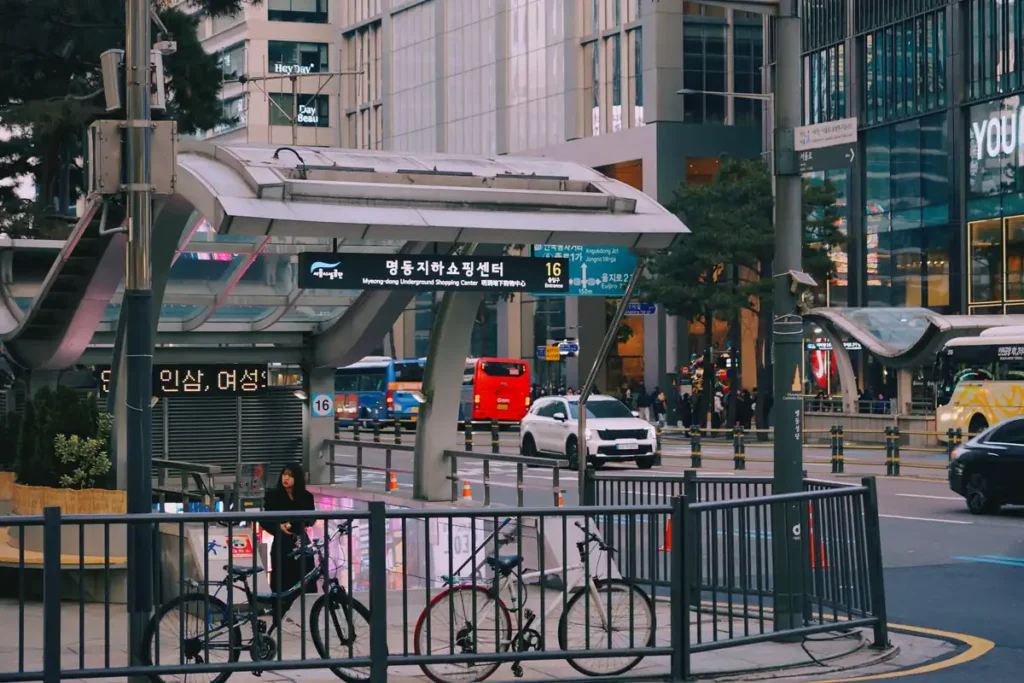
This is why exit numbers matter so much. The station gets you into the right area, but the right exit often gets you to the right place. If you skip that detail, you can arrive and still feel strangely far away.
A transfer on the map and a transfer in real life are not always the same thing
On the map, a transfer can look easy. In real life, some transfers mean long corridors, stairs, crowds, and more walking than you expected. That difference matters even more when you have luggage, tired legs, or family members who are moving more slowly.
So when you look at a route, do not only ask whether a transfer exists. Think about what kind of transfer it might be. A route with one transfer is not automatically the easier one.
Inside the train, it helps to read the flow first
When people get on the subway for the first time, they often start by looking for a seat. In Korea, it is usually easier to pay attention to movement first. Watch how people board, where they stand, and how quickly they clear space near the doors.
This is less about strict etiquette and more about not feeling awkward. Once you understand the flow, you usually know where to stand and when to move without thinking too hard about it.
The atmosphere is usually quieter than some visitors expect
Korean subways often feel quieter than first-time visitors expect. The space is not silent, but the general mood is usually more focused on getting somewhere than on talking through the ride. Many people are looking at their phones or simply staying to themselves.
You do not need to treat that like a formal rulebook. It just helps to know the tone before you step in. Once you know that the space tends to be calm, it is easier to settle into it naturally.
A transport card makes the whole thing smoother
If you are going to use the subway more than once, a transport card makes everything easier. Single-use tickets exist, but they add extra steps, and those steps get old quickly if you are also using buses or making transfers.
A transport card turns the system into something much smoother. It is one small decision that removes friction from the rest of the trip.
Big stations are often harder than the system itself
Some of the most tiring subway moments for first-time visitors happen in large stations like Seoul Station, Express Bus Terminal, or Jamsil. These stations have long passageways, multiple lines, many exits, and enough foot traffic to make even a correct route feel confusing.
That is why it helps to leave extra time when a large station is involved. Sometimes the problem is not the subway system at all. It is just the size of one station.
You do not need confidence first. You need a little extra time
A lot of travelers think they need to feel confident before using the Korean subway. Usually it works the other way around. You take it once or twice, and the confidence comes later.
At the beginning, the useful things are simple. Know where you are entering. Know which station is closest to where you want to go. Check the nearest exit. Let the app guide you. Give yourself more time in large stations, and stay away from rush hour if you can. That is already enough to make the system feel much smaller than it looked at first.