
What does taking off your shoes in Korea really mean?
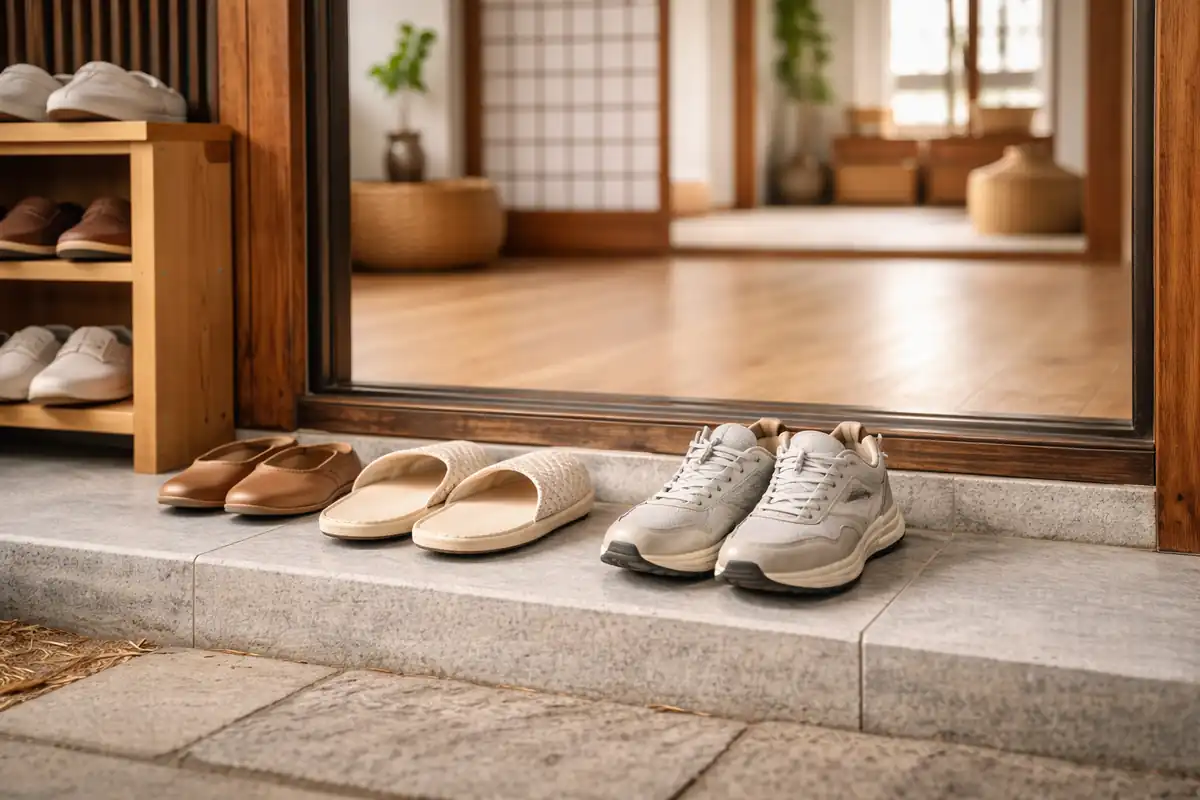
One moment appears again and again once you spend time in Korea. It happens at the door, right before you step inside. You take off your shoes. This does not only happen when entering a home. It also comes up in hanok stays, traditional tea houses, older restaurants, floor-seating spaces, and some cultural experience venues. At first, it can look like a simple rule about manners or cleanliness.
Cleanliness is part of it, but it does not explain enough. The habit of taking off shoes in Korea is tied to a clearer line between outside space and inside space. It also connects to the idea that the version of yourself outside is not quite the same as the version of yourself once you are truly inside.
A home in Korea is more than just an indoor space
In Korea, home does not simply mean the space inside four walls. It often feels like the place where you return to a softer version of yourself, one that is more relaxed and less guarded than the one you carry outside. For many Koreans, home is not just where you rest. It is where the tension of the outside world starts to fall away.
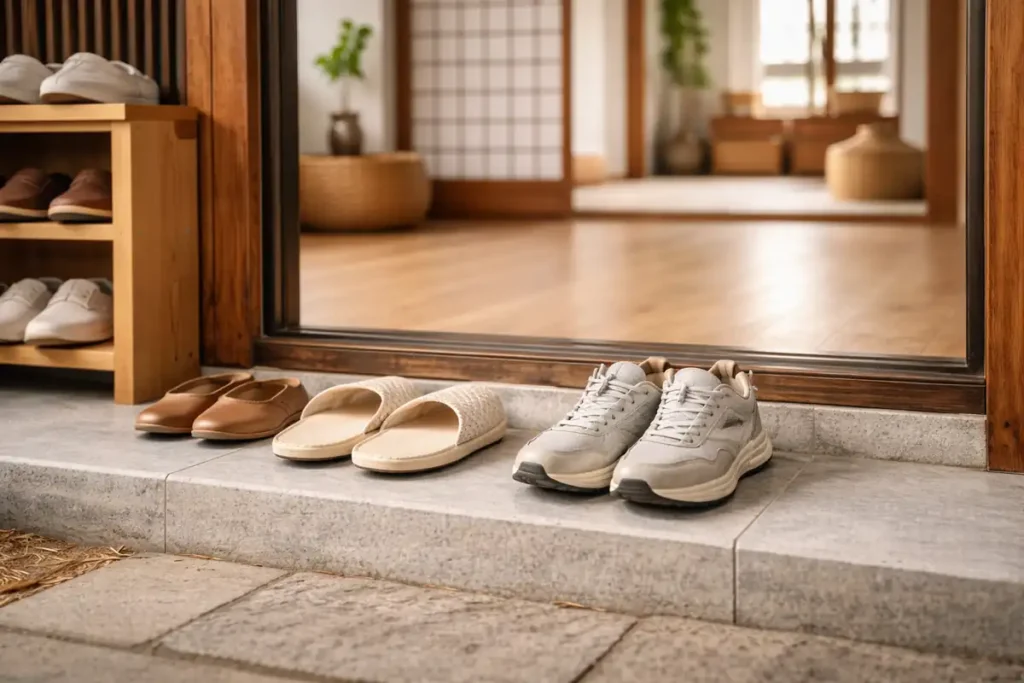
You can see that feeling in very ordinary habits. Many Koreans come home, take off their shoes, and change their clothes almost immediately. That is not only about comfort. Taking off the shoes and clothes you wore outside also means dropping the rhythm and tension of the day outside. Entering the home is not only a change of place. It often feels like a change of state.
The floor is not just the part under your feet
In Korea, the indoor floor has long been more than a surface for walking. It is also where people sit, lean back, stretch out, and rest. Traditionally, the floor sat much closer to the center of daily life than it does in many other places.
That is why the feeling around shoes is stronger than some visitors expect. If the floor is part of the living space itself, then wearing outdoor shoes all the way inside can feel rough in a way that goes beyond dirt. It can feel like bringing the street directly into the part of the space where life actually happens.
To a visitor, this can look overly sensitive at first. Inside Korea, though, it feels natural. The floor is not just a surface. It is part of the room in a much fuller sense.
Taking off your shoes is closer to setting down your outside self
When your shoes are still on, you are still carrying the outside version of yourself. You are still in motion. You are still in the mode of walking, moving, staying alert, getting somewhere.
Once the shoes come off, the feeling changes. You are not just crossing a doorway. You are entering the inner rules of the space. In Korea, taking off your shoes is not only about keeping things clean. It often feels more like setting down your outside self and stepping into an inside version of yourself.
That is one reason the difference between indoors and outdoors can feel so sharp in Korea. A single doorway can change the mood of a space very quickly.
That is why many Koreans find shoes inside the home almost unthinkable
This is an important point for visitors to understand. When Koreans react strongly to the sight of shoes inside the home, it is easy to misread that as fussiness or overreaction. But for many people, it does not feel like a small mistake about dirt.
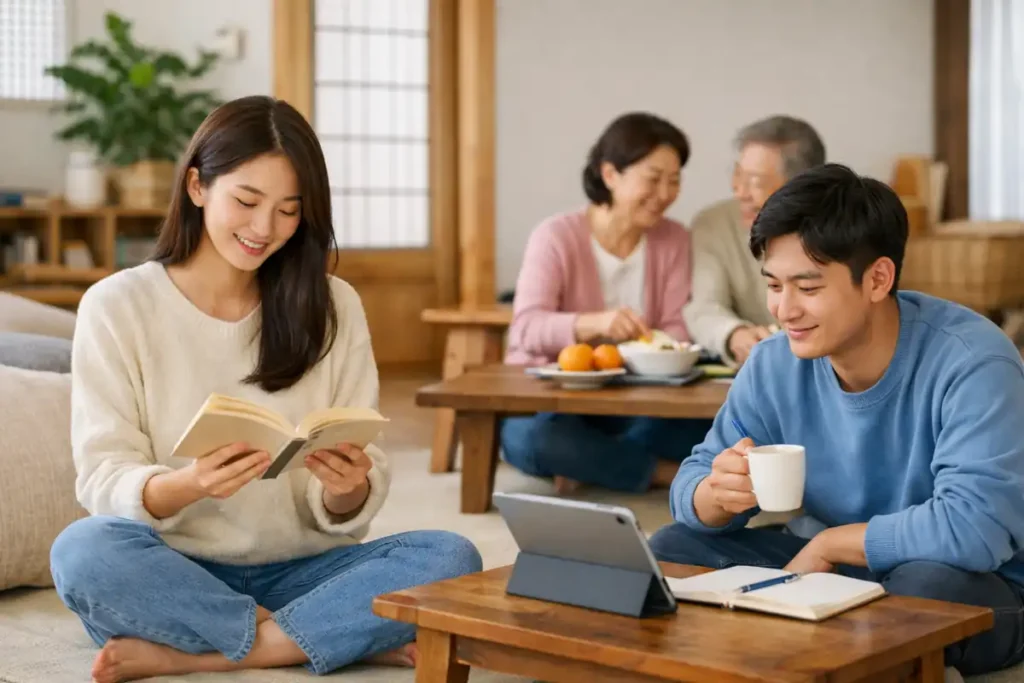
The home is tied to comfort, and the floor is tied to everyday living. Wearing shoes deep into that space can feel like dragging the outside world into a place that is supposed to be protected from it. That is why many Koreans do not experience it as a minor break in etiquette. It can feel wrong at a much deeper level.
Visitors do not need to feel that instinct in the same way. But it helps to understand why the reaction can be so strong. The issue is cultural before it is technical.
The feeling holds both comfort and caution at the same time
Taking off your shoes can signal comfort, but it can also create a different kind of awareness. In your own home, it often means your body can finally relax. The outside day is over. You are in now.
In someone else’s home or in a traditional space, the same action can make you more careful. Once your shoes are off, you may feel that you have entered the place more fully. That can make the space feel closer, but also more deserving of care. Taking off your shoes is not only about becoming comfortable. Sometimes it also means you stop treating the place casually.
Comfort, respect, and a sense of entering more deeply can all exist in that one small action.
This feeling becomes clearer in traditional spaces
In hanok buildings, traditional tea houses, temple experience spaces, and older restaurants with floor seating, this logic becomes much easier to notice. These places were built around the expectation that people would enter them without shoes.
That is why taking off your shoes in these places does not feel like following an arbitrary rule. It feels more like adjusting yourself to the original rhythm of the space. A traveler may find it mildly inconvenient for a second, but that inconvenience is also part of what changes the experience. The place stops feeling like something you are only looking at and starts to feel like something you have actually entered.
The experience changes the moment the shoes come off. Looking at a place and entering it are not the same thing.
For travelers, the important thing is not memorizing rules but noticing the feeling of the space
This can make visitors nervous at first. Should I take them off here. Is it okay to keep them on a little longer. What if I misread the situation. Those worries are normal.
In practice, reading the signals matters more than trying to memorize every case. A shoe rack near the entrance, a raised floor, or a row of shoes already left by the door usually tells you what kind of space you are entering. In most situations, noticing those signals is enough.
That is why this culture makes more sense as a way of reading space than as a list of rules. The deeper point is recognizing that some places in Korea are not spaces you simply visit. They are spaces you enter.
What this reveals about Korean indoor life
Taking off your shoes in Korea is not just a matter of manners. It carries a way of thinking about the floor, about the line between outside and inside, and about the home as the place where a more comfortable self returns.
That is what makes this meaningful for travelers too. It is not only about learning how to behave in a restaurant or someone’s home. It is one way into understanding how Koreans divide space, how they move inward, and where the outside self is expected to stop.
The act itself is brief. But a great deal of Korean everyday life sits inside that brief moment.