
Eating alone in Korea can feel harder than many travelers expect
A lot of solo travelers run into this sooner than they expect. Korea seems full of places to eat, but once you actually try to sit down alone, things can feel a little different. Some restaurants are perfectly fine with one person. Others clearly work better with two or more. Some dishes start at two portions, and some dining rooms feel built around sharing from the beginning.
It is easy to take that personally when you are tired and hungry. But most of the time, it is not personal. Korean dining culture has long been shaped around shared dishes, side dishes for the table, and meals that make the most sense when several people are eating together.
This is not only a foreigner problem
This part is worth understanding early. Solo dining is not always effortless for Koreans either. It has become much more normal than it used to be, and there are now plenty of places where eating alone feels completely ordinary. But that does not mean every category of restaurant has changed at the same speed.
Even for locals, some places still feel easier with company. Grilled meat places, hotpot-style meals, seafood spots, and larger shared dishes can still feel slightly awkward or inefficient for one person. So if eating alone in Korea sometimes feels inconvenient, that does not automatically mean you are being pushed out as a foreign visitor. In many cases, you are running into the same shared-meal structure that Koreans themselves still deal with.
The real goal is not to make every restaurant work
If you are traveling alone, the most useful mindset is not to prove that you can eat anywhere. It is to learn which options work with the least friction. A trip gets easier once you stop treating every meal like a test of courage or authenticity.
Korea can be very manageable for solo travelers once you understand the routes that make sense. If you know where to turn when a restaurant feels too group-oriented, you stop wasting time outside places that were never going to feel natural in the first place.
First: convenience stores
The easiest solo survival option in Korea is still the convenience store. That may sound too obvious to be useful, but it solves more problems than people expect. There is no social pressure, no waiting for a table, no confusion about portion size, and no need to read the room before you sit down.
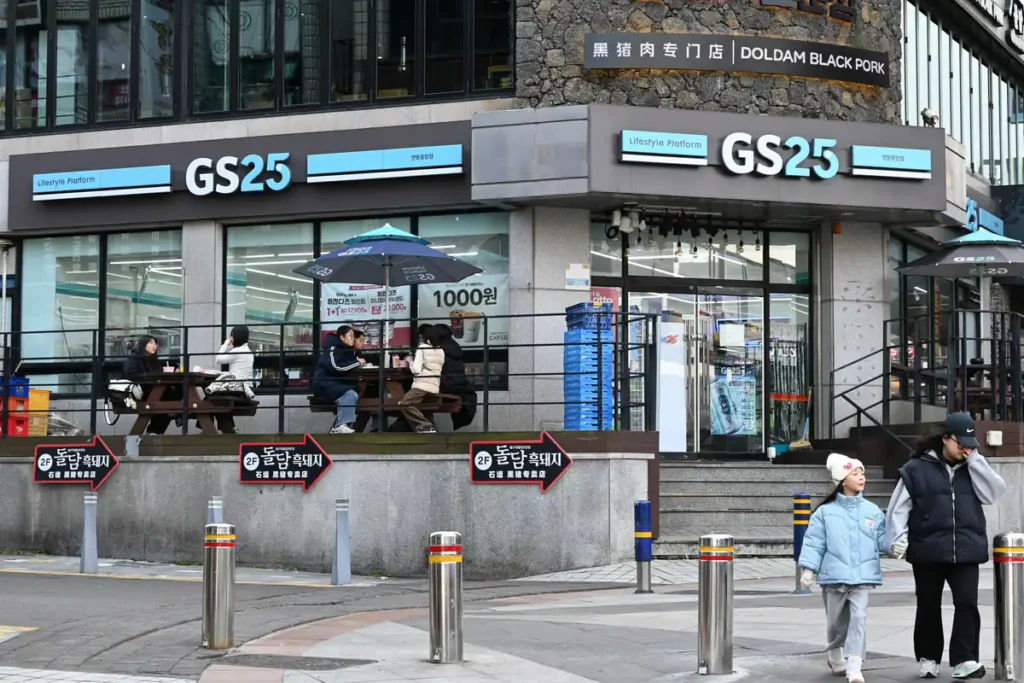
Korean convenience stores also do much more than cover emergencies. Triangle kimbap, lunch boxes, instant noodles, simple side dishes, drinks, desserts, and limited seasonal items make them one of the easiest places to build a small meal on your own terms. You can eat fast, eat cheaply, take food back to your room, or just use the stop to steady a difficult day.
That is why convenience stores matter more than travelers sometimes think. Not every meal on a solo trip needs to be special. Sometimes the better choice is the one that keeps your energy up and lets the rest of the day go smoothly. On arrival day, on rainy days, late at night, or after a long stretch of walking, a convenience store can be the right answer without feeling like a sad one.
Second: delivery
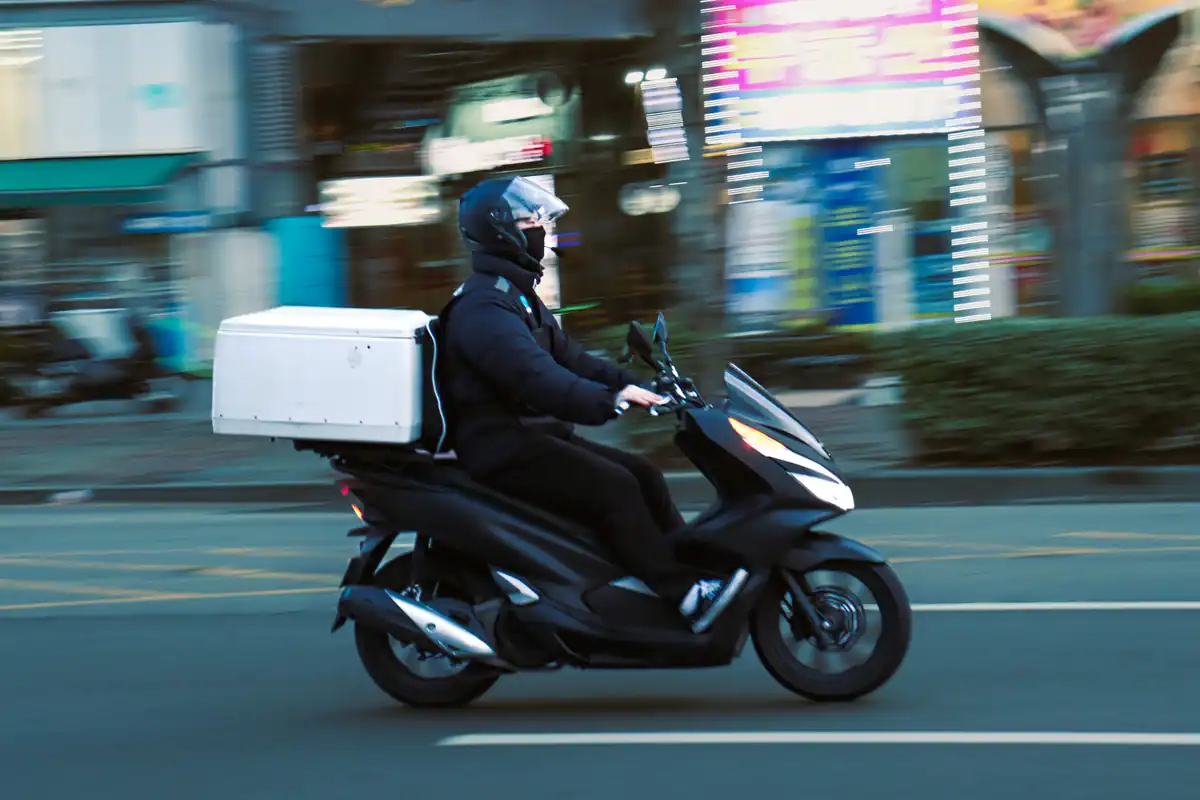
Delivery is the second major survival route, and in Korea it can be a very good one. Some foods are so tied to delivery culture that ordering them in actually feels more natural than eating them in a restaurant. Chicken is the clearest example, but it is not the only one.

For solo travelers, delivery removes several problems at once. You do not have to sit alone in a room that feels built for groups. You do not have to deal with a queue. You do not have to go back out once you are already tired. After a long day, eating comfortably in your room can easily be the better version of the meal.
If delivery feels intimidating because of the apps, there is no reason to panic. You do not always have to solve the system alone. In some accommodations, the front desk or a staff member may help place an order for a fee if you tell them clearly what you want. So delivery does not have to be reserved only for travelers who can handle every app and address field by themselves.
The important thing is to decide on the food before you ask for help. Do not just say, ‘Please order something for me.’ That usually makes things harder for everyone. The other person does not know your taste, your spice level, or what kind of meal you had in mind. It goes much more smoothly if you can say that you want fried chicken, gimbap, tteokbokki, a simple rice dish, or something not too spicy.
That is the best way to think about delivery in Korea as a solo traveler. You do not need to master everything. You just need to know what you want, then get help with the ordering step if you need it.
Third: buffets
Buffets are the most overlooked option here. Many travelers think of them as group dining or special-occasion dining. But for solo travelers in Korea, they can be surprisingly practical.
The biggest advantage is simple. A buffet lets you try different foods for a relatively manageable price. That can matter a lot when you are alone. Instead of committing to one full dish that may or may not be the right call, you can sample several things in smaller amounts. If you are still learning what you like in Korean food, that flexibility is worth a lot.
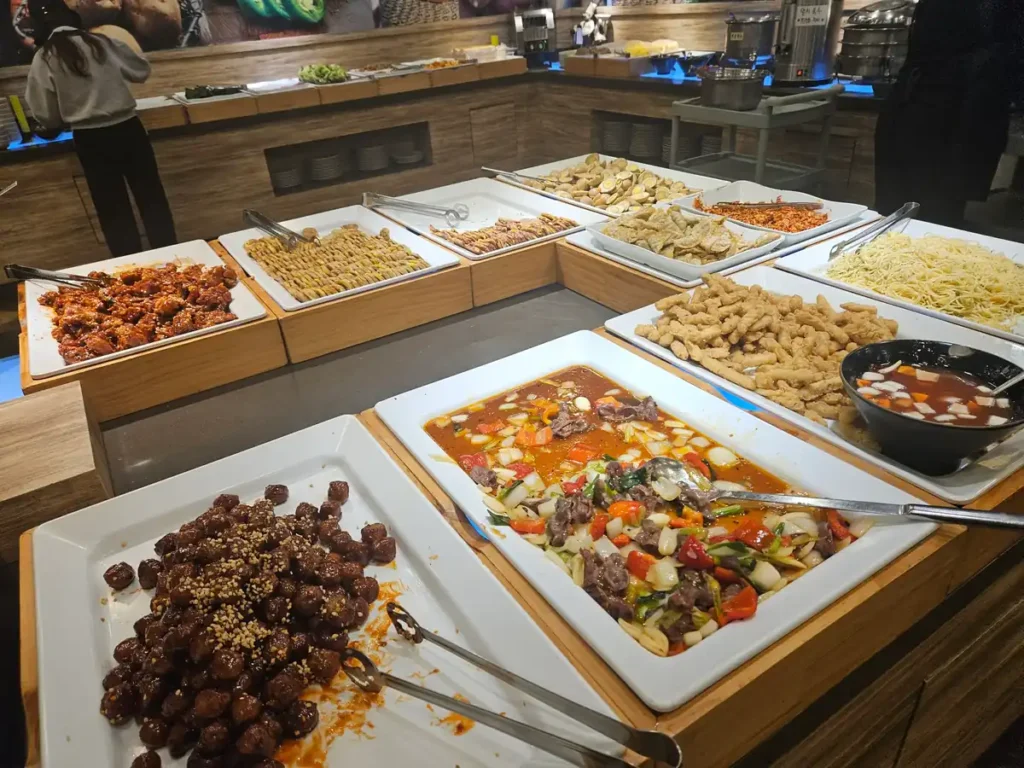
Buffets also help with a specific Korea problem. The food culture often values variety at the table, but solo travelers do not always get access to that variety in regular restaurants. A buffet gives some of that range back. It is not the same thing as eating a shared meal with other people, but it can still be one of the easiest ways to try several kinds of food without the pressure of group ordering.
Of course, not every buffet is a good deal, and quality varies a lot. But as a solo strategy, the category deserves more attention than it usually gets.
Some restaurant types are still harder for one person
It helps to be realistic about this too. Solo travelers usually have an easier time with kimbap shops, noodle places, simple rice meals, fast-casual counters, convenience stores, cafés, and some soup restaurants. Things get harder once the meal is built around shared grilling, large stew pots, seafood spreads, or dishes that clearly expect multiple people at the table.
That does not mean you should never try those places. It just means you should not build your whole day around forcing one of them to work when easier options are already available. Travel gets smoother once you start reading the room for what it is instead of trying to win every table.
Solo travel gets easier once you stop reading everything as rejection
A lot of frustration disappears once you stop telling yourself that every awkward meal is a sign of personal exclusion. Sometimes a place really is inconvenient for one person. Sometimes the system is old-fashioned. Sometimes the dish simply makes no sense as a solo order. That can be annoying, but it is not always personal.
If you understand that early, you can move more strategically and waste less energy. Convenience stores, delivery, and buffets are not second-rate options in that context. They are often the routes that let solo travelers keep moving without turning every meal into unnecessary stress.
Final thoughts
Eating alone in Korea is not impossible, and it is not even unusual anymore. But it still is not equally easy in every corner of the food culture. Some parts of Korean dining remain built around sharing, and that affects foreigners and Koreans alike.
The useful question is not whether you can force every meal to work. It is where solo travel works better with less effort. Convenience stores are the easiest answer. Delivery becomes a strong option once you know what you want. Buffets can be one of the smartest ways to get variety without pressure. Once those three routes make sense, eating alone in Korea usually stops feeling like a problem you have to solve every time.