
KakaoMap makes the most sense once the place is already decided
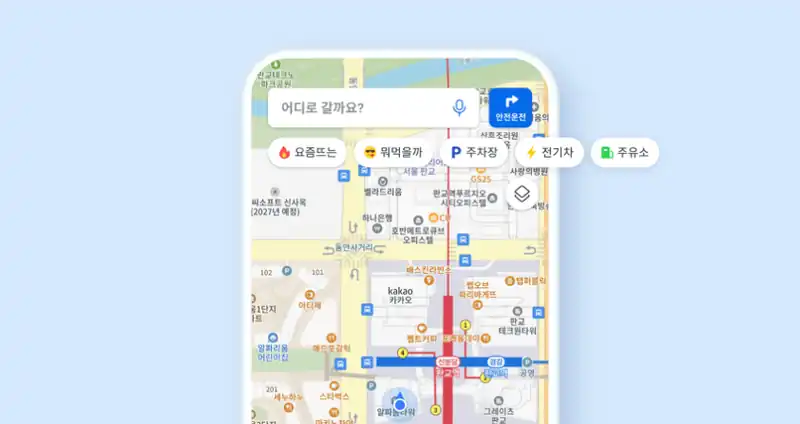
KakaoMap feels strongest when the real question is no longer where to go, but how to get there without the day starting to slip. Basic map functions alone do not explain why the app matters. Naver Map is strong, too, and route search by itself is no longer enough to make one app feel distinctive.

KakaoMap becomes more useful when the destination is already fixed. A local friend has chosen the restaurant. A meeting point is set. A reservation is already on the calendar. On that kind of day, the trip is not about discovery. It is about execution, and KakaoMap feels much more like a movement app than a discovery app.
In Korea, arriving on time matters more than many visitors expect
In Korea, appointment times and reservation times are often treated more strictly than some travelers expect. Whether it is a meal booking, a casual meetup, or a timed stop in the middle of the day, arriving a little early usually feels more natural than arriving right on the edge. Being late tends to stand out more than visitors assume.
That changes what makes a map app useful. The goal is not only to know the route. The goal is to reach the place without turning timing into a problem. KakaoMap works well in Korea because it fits that pressure. It helps travelers think less about abstract route options and more about whether they can still arrive on time.
Public transport first, taxi if needed
In Korean cities, movement often does not stay in one mode from start to finish. Many people check the subway or bus route first, estimate the timing, and then switch to a taxi if the transfer starts looking too long or the schedule begins to tighten. In Seoul, that is not a dramatic backup plan. It is a very normal way to move.

This is where KakaoMap feels practical. It supports the same sequence many people actually use in real life. You look at public transport first because it is efficient. If the route still looks safe, you keep going. If it starts looking risky, you change course. The app fits that pattern well because it helps you react to time pressure without making the whole trip feel reset.
The connection to Kakao T is where the app becomes more useful
KakaoMap feels stronger because it does not stop at the map screen. Using the same Kakao account, travelers can move into Kakao T when they need to. That makes the jump from bus or subway planning to taxi action feel smoother than it would otherwise feel.
This matters most on days with appointments, bookings, or fixed meeting times. In those situations, travel is not really about exploring. It is about protecting the schedule from small delays before they spread into the rest of the day. KakaoMap works well because it helps travelers make that switch faster.
It is not really built for English-first users
KakaoMap can still be useful for directions, but it is hard to call it a truly English-friendly app. Famous places are often searchable in English, but some locations are easier to find only when you type them in Korean. That already changes the experience for travelers who do not read Hangul comfortably.

The limit becomes more obvious once you move beyond the route itself. Place descriptions and reviews are not fully supported in English, so it is possible to find the location but still not feel confident about what kind of place it really is. The app helps you move, but it does not always help you judge the place with the same confidence.
KakaoMap at a glance
Pros
- It is strong for reading public transport timing and movement flow inside Korean cities.
- It connects naturally to Kakao T through the same Kakao account.
- It works especially well when the destination is already decided.
- It fits Korea’s time-sensitive city culture well.
Cons
- It is not a truly English-first app.
- Some places are easier to find only in Korean.
- Place descriptions and reviews are not fully supported in English.
- It is stronger for movement than for deep place understanding.
Why it is still easy to recommend
KakaoMap is still worth recommending because it matches a very common kind of travel day in Korea. Public transport first, taxi if needed, and on-time arrival above everything else. That pattern is not rare. It is part of how many people actually move through Korean cities, especially when the day already has a fixed shape.
It is not the most comfortable app for English-speaking travelers who want rich place information inside the app itself. But when the destination is already set and timing matters more than discovery, KakaoMap can be one of the most practical choices available. Its strength is not in explaining places beautifully. Its strength is in helping the day hold together.
Using KakaoMap well means making faster timing decisions
Using KakaoMap well is not really about finding more places. It is about reading the day correctly. Can you still make it by subway. Is the bus transfer now too risky. Is this the moment to switch to a taxi. Those are the questions the app handles well.
That is why KakaoMap can feel so useful in Korea. On the right kind of day, it is less about seeing where things are and more about reaching them on time. When the place is fixed and the clock matters, that can be exactly what a traveler needs.