
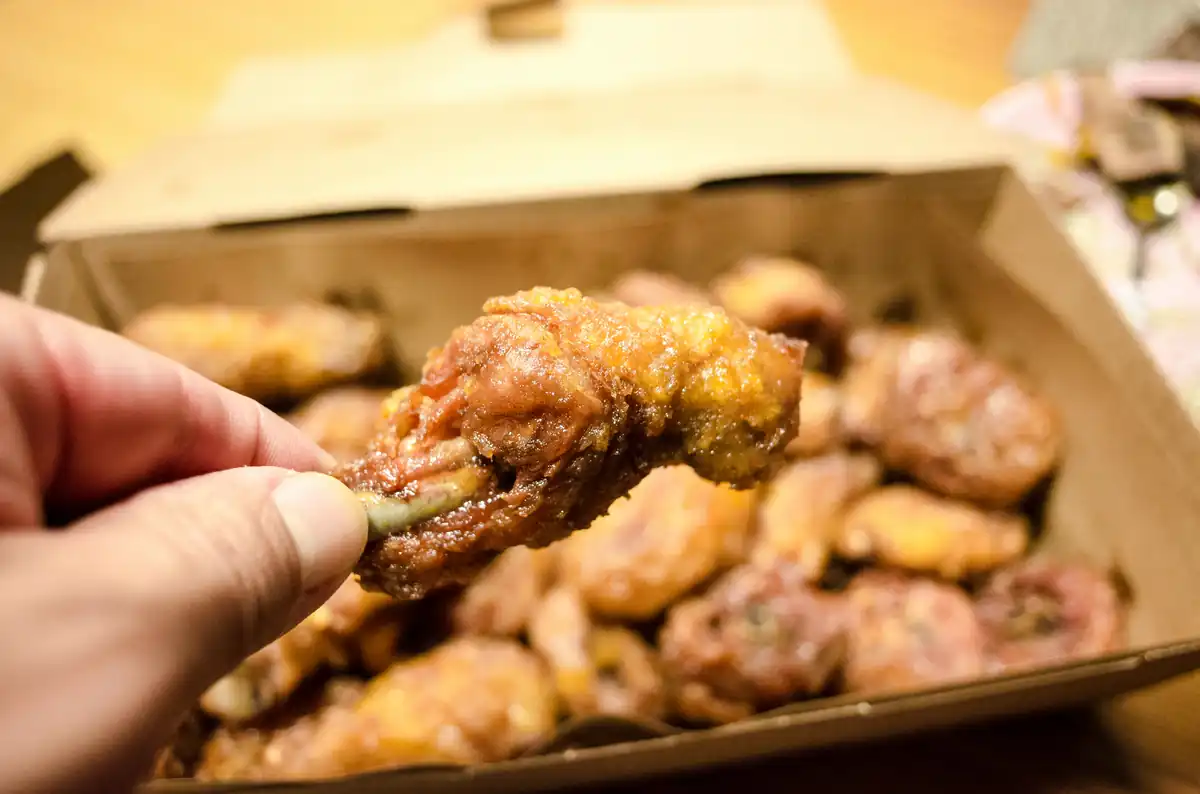
k-chicken got big by never staying still
k-chicken is not just popular because it has been around for a long time. It got big because it kept changing. That is the part many first-time visitors do not see at first. People show up thinking they only need to choose between fried chicken and spicy chicken, then they look at a real menu and realize the category has already spread much further than that.
That is why Korean chicken can feel exciting and a little confusing at the same time. There is a lot to try. There is also a lot of room to choose badly if you go in without knowing what you actually want.
Start with the biggest split
The easiest way in is to divide Korean chicken into two big directions. One is roasted chicken. The other is fried chicken.
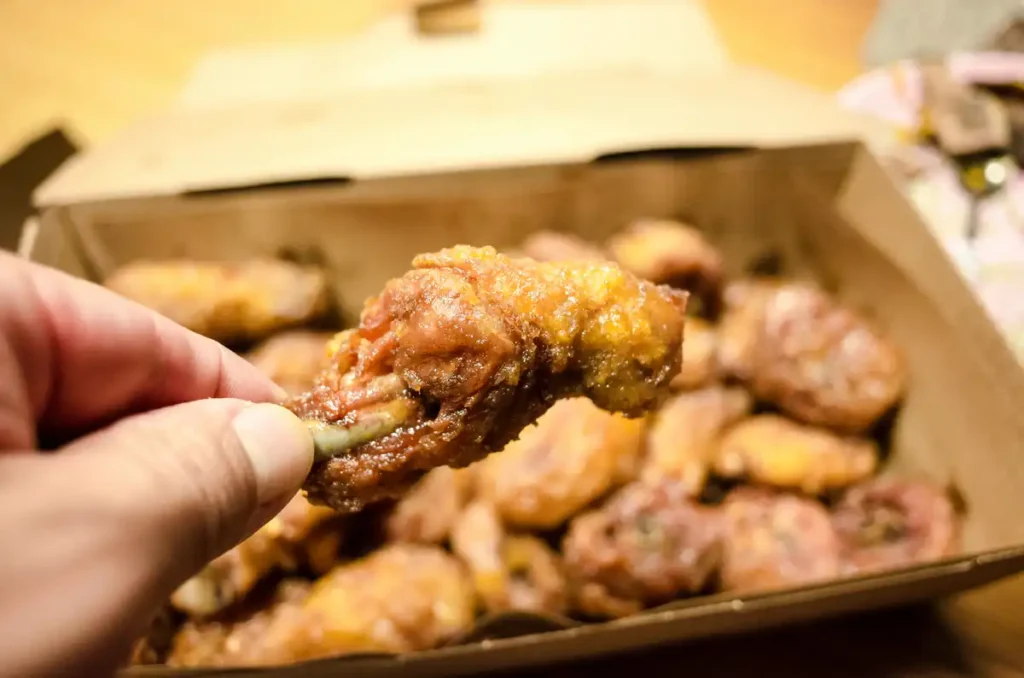
Roasted chicken usually feels lighter. It is less oily, a little calmer, and easier to keep eating if you do not want a heavy meal. Fried chicken is where the louder side of Korean chicken lives. This is the side with the crisp crust, the sticky sauces, the seasoning powders, and most of the styles people outside Korea tend to picture first.
Roasted chicken splits again
Even the roasted side is not one thing. Some of it is oven-roasted. Some of it leans into charcoal flavor.
Oven-roasted chicken is the easier one to read. It feels cleaner and lighter, and it is often the better choice if you want something less greasy from the start. Charcoal-style chicken goes in a stronger direction. The smoke matters. The smell matters. The whole thing leaves a deeper mark.
So even before you get to fried chicken, you already have to decide whether you want something lighter and cleaner or something with real fire in it.
Fried chicken is where things start branching out fast
This is the side most travelers mean when they talk about Korean chicken, but it is also the side that keeps splitting into smaller styles. Some places go very thin with the crust. Others go thick and heavy on crunch. Some stay with a more classic fried base. Others lean hard into sauce, seasoning, or extra things piled on top.
That is why the usual fried versus seasoned split is too simple. Korean fried chicken can be dry and sharp, sticky and sweet, soy-based, garlic-heavy, powder-coated, or built to be eaten with something else on top. Once you see that, the whole category starts to make more sense.
Do not try to conquer the whole category in one week
This is where a lot of first-time visitors go wrong. They think the smart move is to eat whatever sounds most famous, then keep moving down the list. That sounds efficient, but Korean chicken is too wide for that approach to work well.
If you really tried to eat every important style from start to finish, you could spend a full week eating nothing but chicken and still not feel done. It makes much more sense to start with your own appetite. Do you want a clean soy flavor, a heavy crispy fried piece, a strong seasoning powder, a classic sweet-spicy sauce, a lighter oven-roasted style, or smoky charcoal flavor with rice on the side. Once you know that, the choices stop feeling so messy.
If you need a simple place to start, use the big three
There are too many chicken brands in Korea for a traveler to sort through from zero. So if you need a simple starting line, it makes sense to begin with the three brands people reach for most often.
That is why this guide starts with BHC, BBQ, and Kyochon. Not because they are the only brands that matter, but because they give you three useful starting points inside Korean chicken.
BHC is the loud one
BHC makes the most sense if you want something obvious, aggressive, and easy to remember. This is where Korean chicken starts feeling like a branded food experience instead of just a plate of fried chicken.
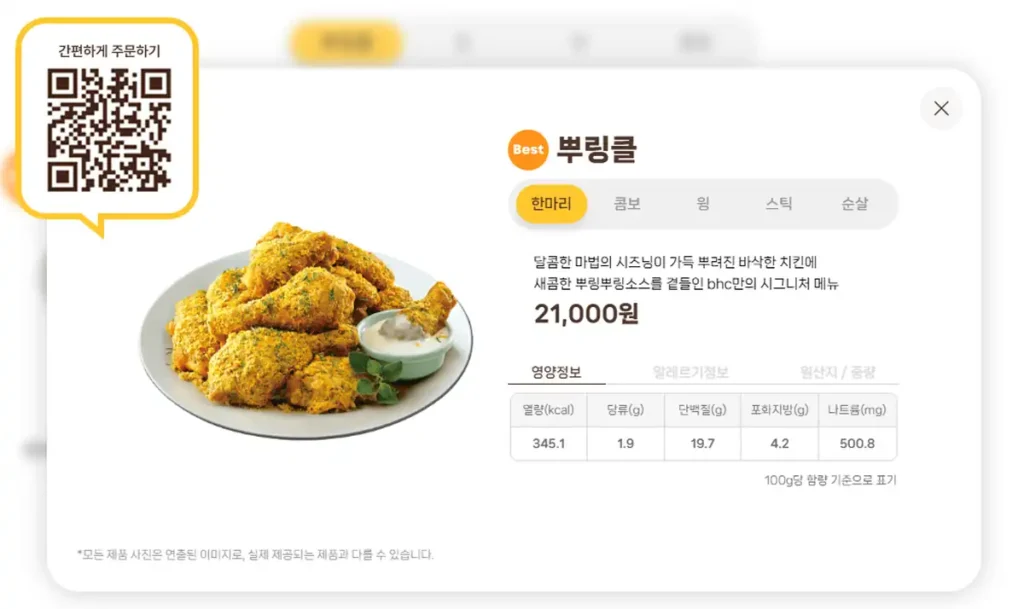
Bburinkle is the clearest example. It is heavy on cheese-garlic seasoning and does not try to be subtle. Macho King goes in a dark sweet-salty direction. Even the sides matter here. If you want a meal that feels built around impact, BHC is a very easy place to begin.
BBQ is the fried classic
BBQ is easier to explain because fried chicken itself still sits at the center. The crust usually feels thicker, louder, and more obviously crisp. There is a nutty smell to it, and the seasoning in the meat tends to feel stronger from the start.
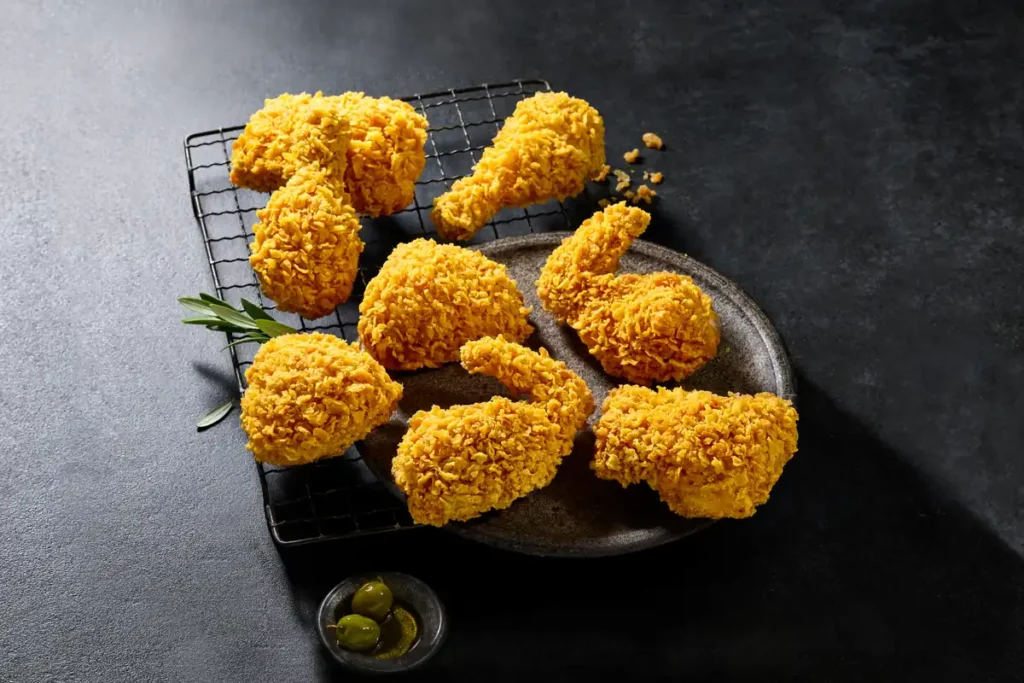
If you want the kind of Korean chicken that feels close to a classic idea of fried chicken but still very Korean in texture, salt, and crunch, BBQ is one of the clearest answers.
Kyochon goes cleaner
Kyochon feels different from both. It is less about brute force and more about a neater finish. It often feels like the tidier side of Korean chicken.
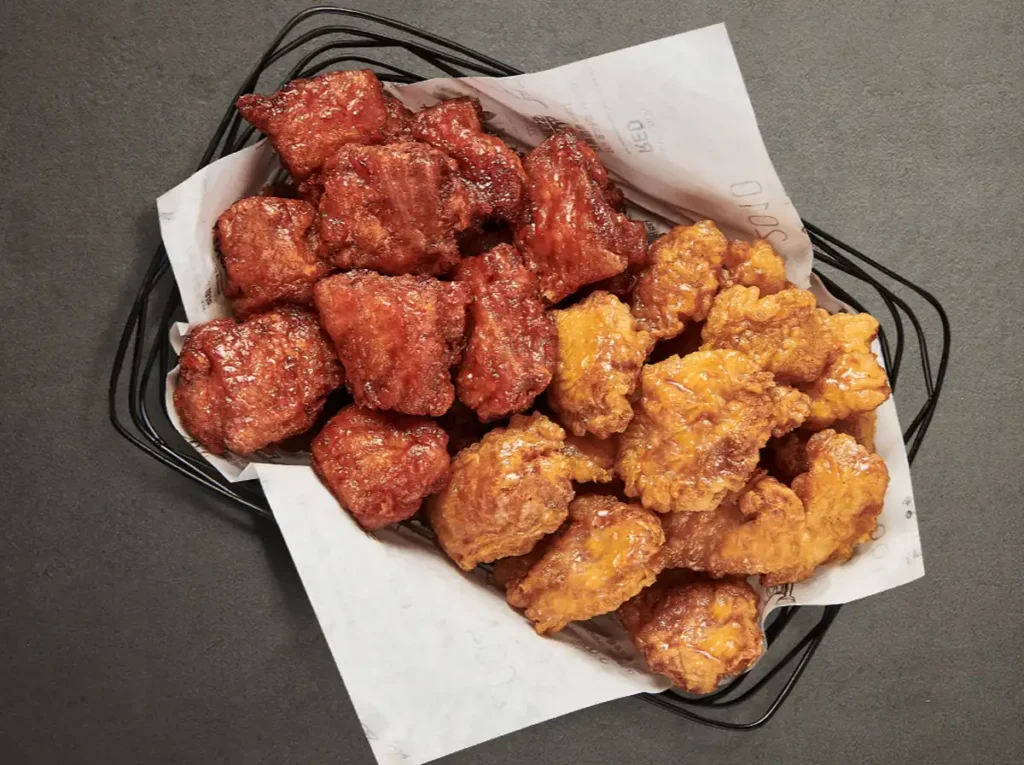
The combo menus are part of that image. Honey Combo is the one many people remember first, with soy and honey working together in a clean sweet-salty line. Red Combo pushes into a sharper Korean kind of heat. If you want something that feels more controlled and a little less noisy, Kyochon is usually where that search starts.
If those are not your lane, follow the one that is
If what you really want is classic Korean yangnyeom chicken, Cheogatjip makes more sense than forcing yourself into the big three. If you want a lighter oven-roasted direction, Goobne is easier to understand right away. If you want charcoal flavor and do not mind the meal turning into something closer to chicken with rice, Jicoba goes in its own direction and stays there.
That is the real point. The best brand is not always the biggest one. It is the one that matches the version of Korean chicken you were actually hoping to eat.
Delivery is normal, but your first round should be in the store
There is one more thing that matters. Korean chicken is a delivery food in a very real way. A lot of people in Korea think of it first as something they order to the house, not something they cross the city to sit down and eat.
But if you are a traveler and you want to enjoy Korean chicken properly, the first round is better in the store with beer. Freshly fried chicken and delivered chicken are not the same meal. Twenty or thirty minutes in a box can flatten the crust, soften the heat, and take away a lot of the sharpness that makes Korean fried chicken so satisfying in the first place.
That does not make delivery bad. Delivery is part of the culture. But if you only do it that way, you miss one of the best parts. Korean chicken at its strongest is often the piece that just came out, hit the table fast, and met a cold beer before the crust had time to soften.
The easiest way to get Korean chicken right
So the goal is not to memorize every chain or pretend you need to understand the whole market. Start smaller than that. Pick the style first. Then pick the brand that fits it. And if you can, let the first meal happen in the store instead of at the end of a delivery timer.
That is how Korean chicken starts feeling less like a giant category and more like something you can actually enjoy. Not by eating everything, but by choosing the one version that sounds most like yours and catching it at its best.