
Waiting is often part of the system
Many foreign travelers assume that famous restaurants in Korea work like popular restaurants in other countries. They expect reservations to be difficult, limited, or booked out in advance. In reality, the more common problem is different. Many popular restaurants in Korea do not usually take reservations in the first place.
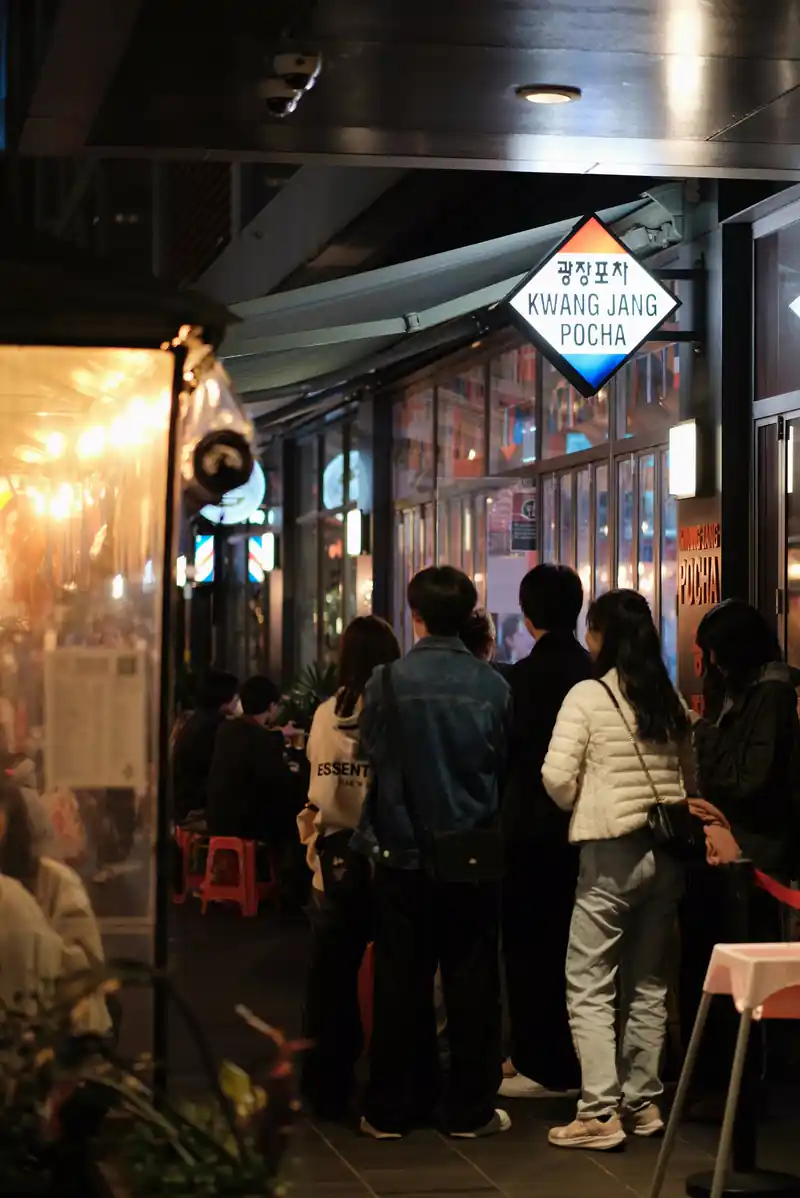
That is especially true for well-known local places, busy lunch spots, older restaurants with strong word of mouth, and places built for fast turnover. The basic structure is often simple: people arrive, wait, and enter when seats open up. Some places now use waiting tools such as Catch Table, which can make the process more organized, but that does not change the main point. Even when the line is digital, waiting is still part of the experience.
This matters because many travelers prepare for Korean food by looking for the right places, but not by understanding how those places actually work. If you only search for famous names, you may end up at a restaurant that is excellent for locals but exhausting for a visitor on a tight schedule.
Avoid the busiest hours on purpose
The easiest way to enjoy popular restaurants in Korea with less stress is to stop showing up at the exact same time as everyone else. If a restaurant is known mainly for lunch, going at peak lunch hours usually means entering the hardest version of the experience. If a place is strongest at dinner, walking in during peak evening hours often creates the same problem.
A better approach is to shift your timing. Lunch-driven places are often easier to try in the evening. Dinner-heavy places may be more manageable around lunch. This does not always mean there will be no wait, but it often reduces the intensity of the crowd and gives you a better chance of eating well without losing too much of your day.
Travelers do not need to copy the same rhythm as locals. A Korean office worker may accept a packed lunch rush because the restaurant is familiar and nearby. A traveler has different priorities. Energy, timing, walking distance, and the rest of the day matter just as much as the meal itself.
Big restaurants can be a smarter choice than tiny ones
Travelers often imagine that the best Korean restaurant experience must come from a tiny hidden place with only a few tables. Sometimes that is true. Many small restaurants are genuinely excellent. But small size also creates a structural problem. If a restaurant has very few tables, one delay affects everyone behind it. A short line can still turn into a long wait because the room simply does not move very fast.
That is why larger restaurants can be a much better target than travelers expect. A famous place that uses multiple floors, a full building, or a larger dining room may look intimidating from the outside, but it can actually move people faster. The same is often true for restaurants with very limited menus. Places built around one, two, or three main dishes usually have a simpler kitchen flow, quicker ordering, and more predictable turnover.
For a traveler, this can be far more useful than chasing the smallest or most romantic-looking place. A restaurant that serves many people efficiently may give you a better overall experience than a charming small spot that traps you in a slow queue.
Some meals should be treated like a schedule block
There will still be places where none of the easy strategies fully solve the problem. Some famous restaurants are worth visiting only if you accept that the meal will take time. In those cases, the best move is not to squeeze the restaurant between two bigger plans. It is better to build part of the day around it.
If you know a place is important to you, leave breathing room before and after. Walk nearby, explore the area slowly, or treat the wait as part of that neighborhood rather than as a disruption. The mistake is not always waiting. The mistake is expecting a high-demand restaurant to behave like a quick stop.
Instead of treating the line as lost time, it is often better to see that meal as one of the day’s main events. That does not make the wait disappear, but it does stop one restaurant from ruining everything around it.
The goal is not perfection but control
Enjoying popular restaurants in Korea is not about finding a secret trick that eliminates every queue. It is about understanding the system well enough to make better decisions. Popular places often run on waiting, not reservations. Peak hours are usually the worst time for a traveler to copy local behavior. Bigger restaurants with faster turnover can be more practical than tiny places with limited seating. And some meals are better treated as a real part of the schedule, not an extra stop between other plans.
If you understand those patterns, you do not need to avoid famous restaurants. You just need to approach them more strategically. That usually leads to a better meal, a smoother day, and a version of Korean food culture that feels exciting instead of draining.