
Not every Joseon-era experience has to begin at a palace
When travelers want to experience the Joseon era in Korea, they usually start with Seoul’s palaces. That choice makes sense. Palaces are symbolic, visually striking, and relatively easy to fit into a first trip. They are also one of the simplest ways to begin understanding Korean history without leaving central Seoul.
But palaces are not the only way into Joseon-era Korea. For some travelers, Korean Folk Village can leave a stronger impression. A palace shows the center of power and the polished face of the era. Korean Folk Village feels closer to the world around it. It gives travelers a wider sense of what Joseon might have felt like beyond royal buildings and ceremonial spaces.
What Korean Folk Village actually is
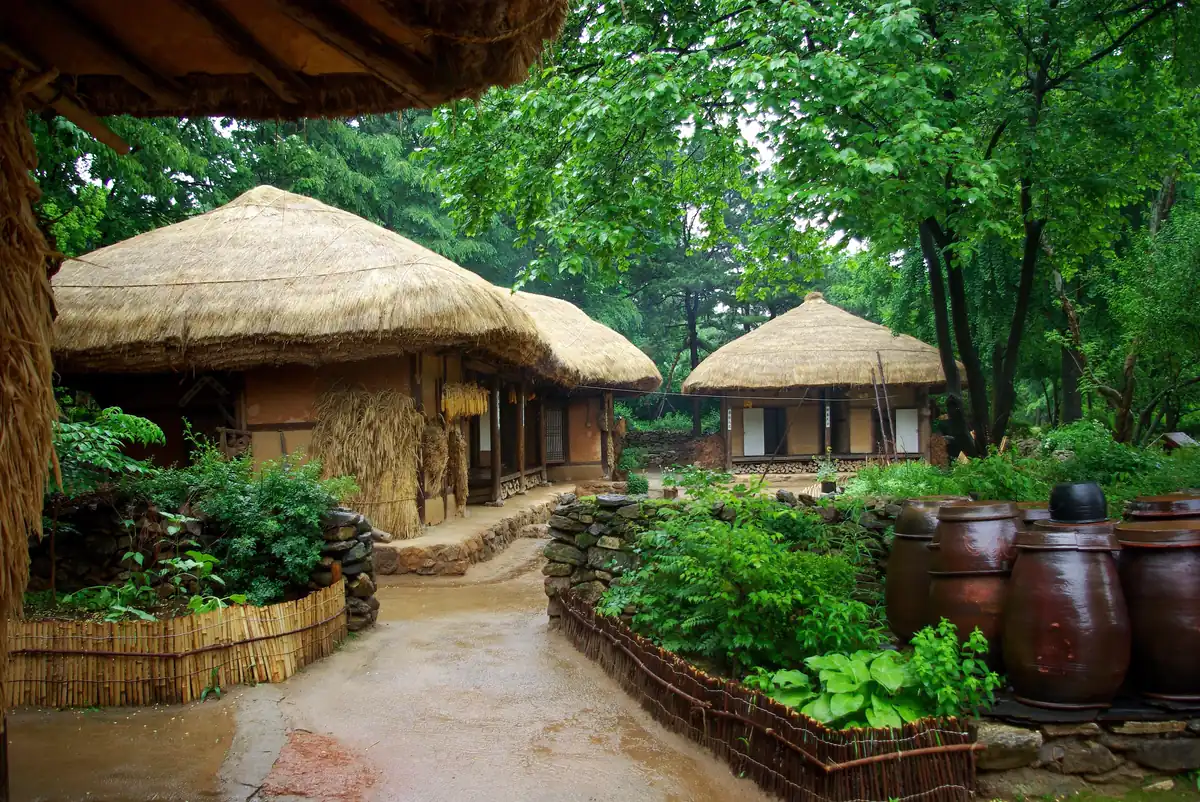
The name can sound vague if you have never heard it before. Korean Folk Village is not a small historical corner with only a few traditional houses. It is a large open-air site built around the atmosphere of a Joseon-era village. Instead of focusing on one landmark, it spreads the experience across homes, lanes, workshops, performance areas, and spaces tied to daily life.
That shift matters because the site does more than ask you to admire old architecture. It lets you move through a setting. A palace often feels like a carefully framed historical destination. Korean Folk Village feels more like stepping into a much larger background of the period, where Joseon looks less ceremonial and more lived in.
Why it feels different from a palace
Palaces are often the easier first step. They are usually cheaper, easier to reach, and easier to add to a day that already includes cafés, shopping, or nearby neighborhoods. Korean Folk Village works differently. It is not the kind of place that slips lightly into a spare hour. It asks for more time, more walking, and a more intentional plan.
That extra effort is also the reason some travelers end up liking it more. A palace gives you the symbolic Joseon image many people already expect. Korean Folk Village gives you more range. The mood changes as you move. The scenery feels less formal. Instead of stopping at a few iconic views, you keep passing through spaces that make the era feel bigger and more human.
It shows more than royal Joseon
This is where the site becomes especially interesting for foreign travelers. When people imagine old Korea through dramas or travel photos, they often think first of royal robes, palace gates, and court scenes. Those images matter, but they are only one part of the era. Korean Folk Village opens the door to a broader version of Joseon.
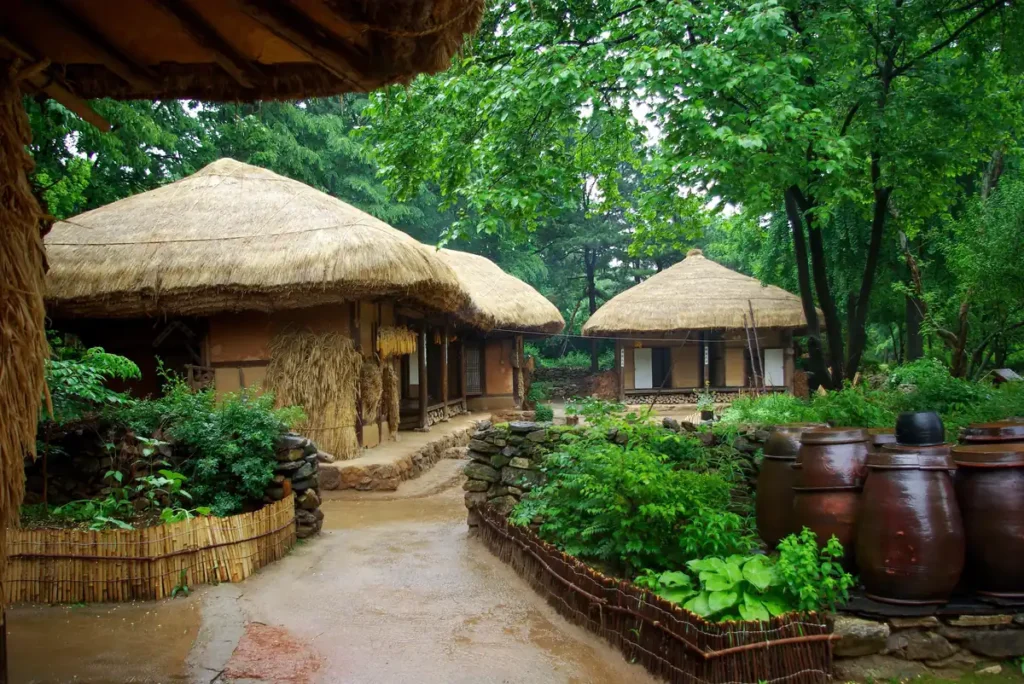
You are not limited to the polished world of kings and officials. The space naturally brings to mind noble households, commoner homes, village roads, market scenes, work spaces, and the quieter social background that period dramas also rely on. Instead of seeing Joseon only as a grand and distant age, travelers can start to picture it as a place where ordinary people actually lived.
The hanbok mood can feel broader here too
This difference also changes how hanbok can feel. Around the palaces in Seoul, hanbok rental is often tied to photos, palace admission, and the dramatic appeal of colorful royal or noble styles. That works well if you want a strong first image. It is easy to understand why so many travelers begin there.
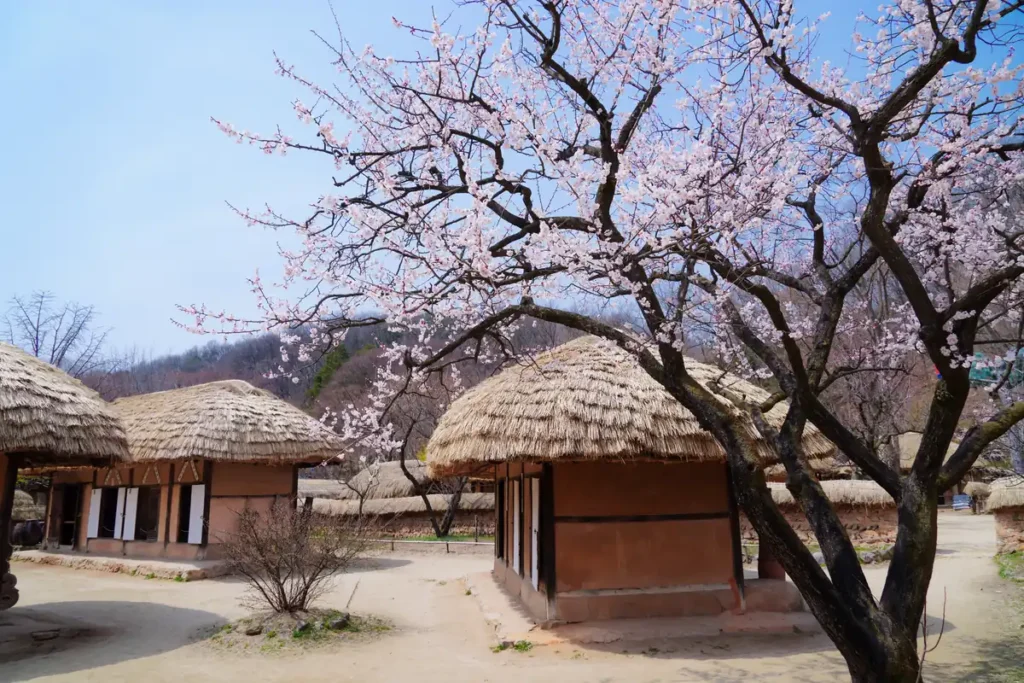
Korean Folk Village creates a different context. Because the whole site feels closer to a lived-in village than a formal royal setting, the atmosphere supports a wider range of Joseon-era imagination. The appeal is not limited to one glamorous court image. It can feel more connected to the kinds of scenes travelers remember from dramas, from larger households to village roads and everyday backgrounds. For visitors who want something more immersive than a palace-photo moment, that difference can be meaningful.
It can be easier to enjoy without much historical knowledge
Another strength of Korean Folk Village is that it does not rely as heavily on prior knowledge. Some first-time visitors enjoy palaces but still feel slightly unsure of what they are seeing once the major visual impact settles down. Beautiful roofs and courtyards can start to blur together if you do not already know the meaning of each space.
Korean Folk Village can be easier for that kind of traveler. The environment keeps changing. One area feels residential, another feels performative, and another feels practical. You do not need to understand every historical detail to feel that the day is moving. The site offers more small points of contact, which can make the experience feel less formal and less mentally demanding.
Why some families and mixed groups may prefer it
This is also one reason the village can work well for families or groups with different interests. Not everyone enjoys traditional sites in the same way. Some people care about architecture. Some care more about photos. Others like performances, open space, or a setting that simply feels different from the modern city. Korean Folk Village can absorb those differences better than a narrower historical stop.
That does not automatically make it the best option for every group. It simply means the experience is spread across more kinds of appeal. In mixed groups, that can reduce the feeling that everyone has to appreciate the site in exactly the same way.
But it is not a light or cheap stop
Korean Folk Village is not a palace-style quick win. It is not the kind of place where you drop in briefly, spend very little, and leave satisfied after a light look around. The site is large, and its strengths only really appear if you are willing to give it time.
That means travelers should think about cost and energy more honestly. The issue is not only the entrance fee. Once you add transport, meals, and the general shape of the day, the experience starts to feel more like a dedicated half-day or full-day outing than a casual tradition stop. If your Korea trip is tightly budgeted or your schedule is packed, that difference matters.
Palaces are usually the better choice if you want the cheapest and easiest introduction to old Korea. Korean Folk Village asks for more, but it can also give more back if you want a deeper and more entertaining historical experience rather than a lighter symbolic one.
It is harder to combine with other stops
This is another practical weakness. Seoul’s palaces are easy to connect with nearby cafés, hanok streets, museums, restaurants, and neighborhoods. They fit naturally into a layered travel day. Korean Folk Village is less flexible. It works more like a major destination than a passing stop.
That means it is harder to build a dense multi-stop day around it. Once you go, the village itself tends to become the center of the schedule. Some travelers will like that. Others may find it inefficient, especially if they prefer short distances and several smaller stops in one day.
Public transport and busy weekends can make it feel heavier
Travelers should also be realistic about transport. Korean Folk Village is not impossible to reach by public transit, but it does not have the same low-friction feeling as stepping out of a subway station near a Seoul palace. If you are relying entirely on public transport and already feeling tired from moving around Korea, the journey can feel like a bigger commitment than it first sounds.
Weekends and holiday periods can raise the difficulty. A place that feels atmospheric on a calmer day can feel much more tiring when it is crowded. Walking slows down, resting becomes less comfortable, and meal waits can become part of the day whether you planned for them or not. If you visit at a busy time, it helps to think about your meal timing in advance instead of assuming you will eat whenever you feel like it.
That matters even more because Korean Folk Village is not the kind of place most travelers leave quickly. Once you have made the trip, you will probably want to stay long enough to feel it was worthwhile. When the site is crowded and food lines are long, the day can become more draining than expected.
So who is it really good for?
Korean Folk Village makes the most sense for travelers who already know they want more than a quick traditional highlight. It suits people who enjoy historical atmosphere, period-drama mood, wider scenic variety, and a slower, more immersive day. It also works well for travelers who do not mind spending more time and money in exchange for a fuller sense of old Korea.
It is less ideal for travelers who want the easiest first introduction, the cheapest traditional stop, or a short schedule with several tightly connected city stops. Those travelers may still be happier with a palace first.
Final verdict
Korean Folk Village is not the easiest Joseon-era destination, and it is definitely not the lightest one. It asks for more time, more effort, and a more realistic budget. It is also harder to combine with other attractions, and travelers using public transport should not underestimate the friction. On weekends or holidays, crowding and meal waits can add another layer of fatigue.
But for travelers who want to experience Korea more deeply rather than just quickly, that trade can make sense. A palace is often the easier symbolic beginning. Korean Folk Village is worth considering when you want a wider, more vivid, and more entertaining sense of Joseon-era Korea.