
A palace visit should not start with the season
Many travelers start with the wrong question. They ask whether spring is the best time, whether night visits are more beautiful, or whether autumn is the most Korean. Those details matter, but they should not come first. A palace visit usually works better when you start with your own travel conditions instead.
The more useful questions are simpler. Are you seeing a Korean palace for the first time, or have you already done the basic version before? Is this your one chance to get a clear palace experience, or can you come back another time? Who are you going with, how much time can you give it, and what comes after the visit? Once those things are clear, the season and time of day become much easier to choose.
Beginners and return visitors do not need the same kind of palace visit
If this is your first palace visit in Korea, the best choice is usually not the most unusual one. First-time visitors often do better with something that feels clear, symbolic, and easy to understand at a glance. In that case, a daytime visit to a palace with a strong first impression usually makes more sense than trying to chase a rarer experience right away.
More experienced visitors can be pickier. If you have already seen a major palace before, or if this is not your first time in Korea, you may care less about getting the classic image and more about finding a different mood. That is where quieter visits, stronger seasonal contrast, or a special opening can become more appealing.
In other words, beginners usually need clarity first. More experienced travelers can afford to care more about atmosphere, variation, and timing.
It also matters whether this is your only realistic chance
Not every traveler should choose the same level of risk. If this trip may be your only real chance to see a palace in Korea, the smarter choice is usually the more stable one. You want the kind of visit that gives you a strong Korean image, a low chance of disappointment, and a memory that still feels complete even if you never return.
But if you are likely to come back to Korea again, your choices open up. You do not have to force the most iconic version into this one trip. You can save something for later, take a more seasonal approach, or even try a version that feels less basic and more specific to your timing.
That is why the same recommendation does not work for everyone. A one-time visitor often needs reliability. A repeat visitor can be more adventurous.
Who you are going with changes the right answer
A palace visit can work for solo travelers, couples, friends, and families, but not always in the same way. Alone, a palace can feel calm and reflective. It is easier to move at your own pace, stop where you want, and enjoy the quieter side of the experience. In that case, a less crowded time can matter more than a dramatic seasonal backdrop.
For couples, the visual side often becomes more important. Photos, atmosphere, hanbok, and softer light can all matter more than efficiency alone. Friends may care more about getting a strong image, moving on easily to the next stop, and fitting the palace into a larger city day.
With parents, comfort matters more. Heat, walking distance, and fatigue become much more important, which means summer midday can be a poor choice even if the palace itself is beautiful. Families with children may also need a shorter and clearer version of the visit rather than a long, quiet, slow-moving one.
So the question is not only which palace looks best. It is also who the day has to work for.
How much time you can give the palace matters more than people think
A palace visit does not have to be long to be meaningful, but the amount of time you have will change what kind of experience makes sense. If you only have around thirty minutes, the visit is probably about first impressions, one or two symbolic views, and a few photos before moving on. In that case, you should not expect a deep, slow experience, and that is completely fine.
If you have about an hour, the palace starts to feel more complete. You can walk a little, take photos without rushing too much, and still leave with a better sense of the place. For many travelers, this is the most balanced version of a palace visit.
If you have half a day, the palace can become part of a larger route. You can pair it with a nearby neighborhood, a cafe, a meal, or a slower walk. At that point, the palace is no longer just a stop. It becomes part of the shape of the day.
The next stop can change which palace makes sense
This is one of the most practical things travelers forget. A palace should not always be chosen as if it stands alone. In real travel, it usually sits inside a larger route. That means the next stop matters.
If the palace visit is followed by a quiet neighborhood walk, a hanok area, or a slower cafe stop, one kind of palace may feel like a better fit. If the next step is shopping, a city-center meal, or a more functional downtown route, another palace may make more sense simply because the flow of the day works better.
That is why the most famous palace is not always the best palace for the day. Sometimes the better choice is the palace that connects most naturally to what comes next. Palace choice is often less about picking a landmark in isolation and more about building a smoother day overall.
Only after that should you think about the season
Season still matters, but it sits on top of the earlier decisions rather than replacing them. Spring can be beautiful because blossoms and palace architecture often work well together, but it is not automatically the best choice for every traveler. If the area is crowded and your day is tight, spring can be more tiring than rewarding.
Summer is even more conditional. A palace can still work in summer, but often only if you visit early or later in the day. Midday heat changes the experience too much, especially for older family members or anyone who gets tired easily. In summer, time of day matters more than the season itself.
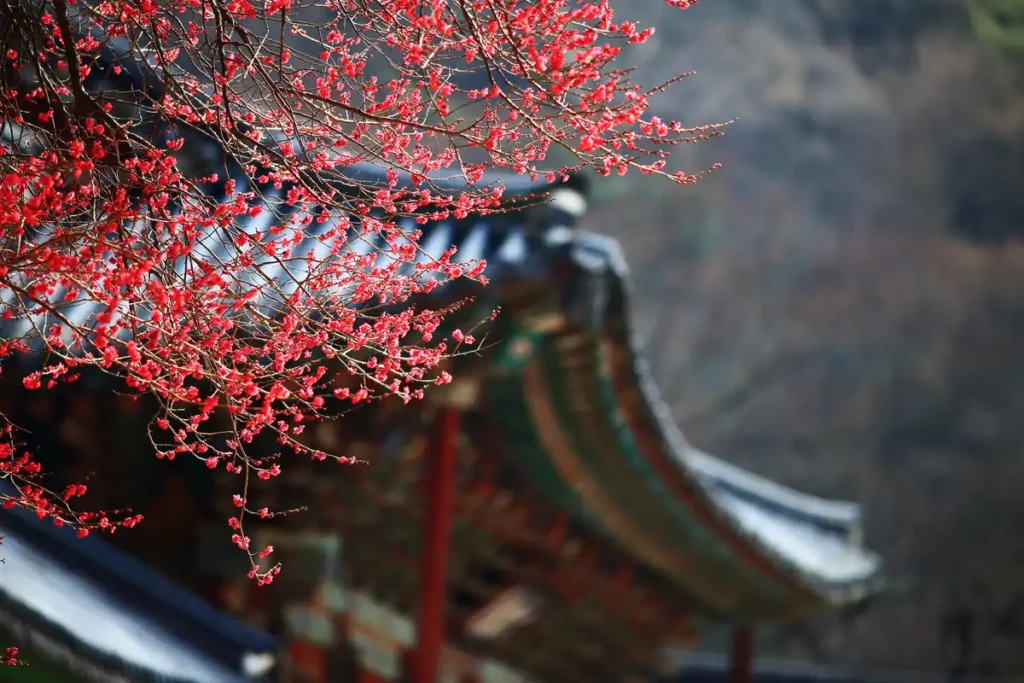
Autumn is often the easiest season to recommend because it tends to feel balanced. The light, air, and colors support a slower walk without requiring the same luck that spring or winter sometimes does. Winter can be memorable too, especially for travelers from places where snow is uncommon, but it is also less stable. A winter palace can be magical if the conditions line up, but it is not the safest default choice.
The key point is simple. No season is good for everyone in the same way.
The default palace experience is daytime
This point should be clear. The basic palace experience is a daytime visit. That is the version most travelers should think about first because it is easier to fit into a schedule, easier to understand, and easier to recommend to beginners.
Daytime also lets the overall structure of the palace show itself more clearly. Rooflines, courtyards, gates, open space, and the rhythm of the grounds are simply easier to take in during the day. For travelers who want a strong first palace experience without too much planning pressure, daytime is usually the safest and most complete default.
Night openings and performances belong to a different category
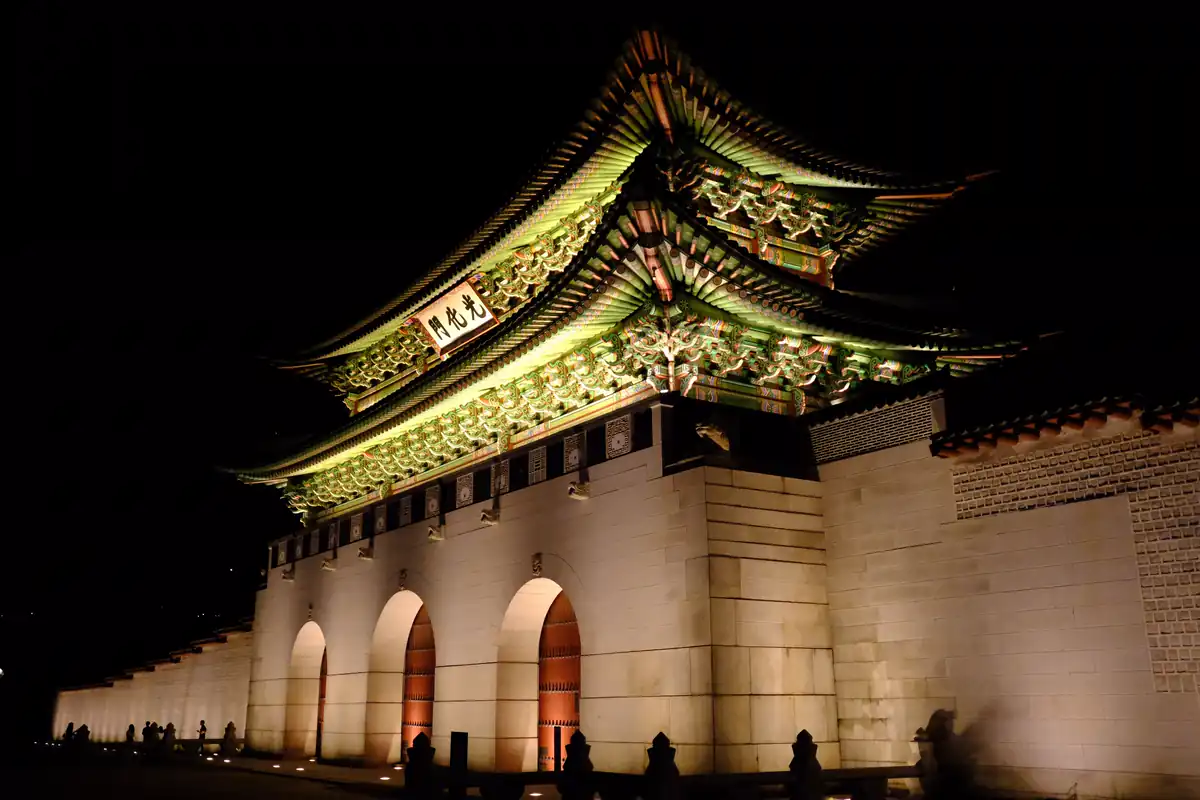
Night openings and palace performances should not be treated as the normal version of a palace visit. They are special experiences, not the basic template. A regular daytime palace visit is something you place inside your own schedule. A night opening or performance often works the other way around. You have to shape part of your schedule around it.
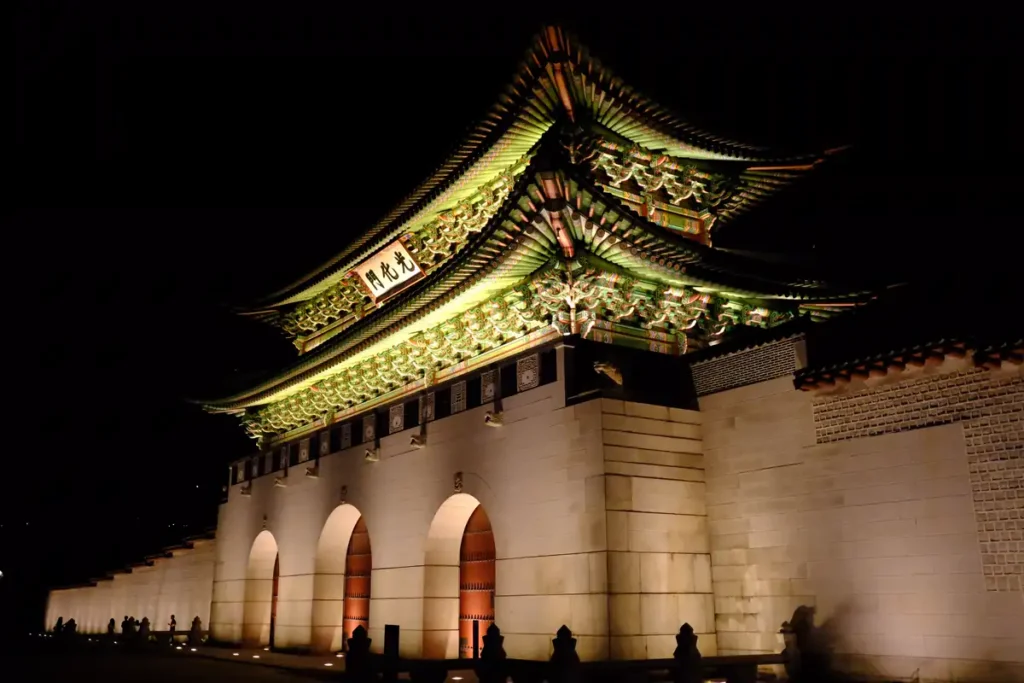
That change matters. These events are seasonal, limited, and tied to specific operating windows. In many cases, entry depends on advance booking and limited numbers rather than simple walk-in flexibility. That is one reason they feel more special, but it also makes them less suitable as the default recommendation for every traveler.
It is worth saying this clearly too: these are not easy experiences even for Koreans. Many Koreans have never managed to go, simply because the season did not match their schedule or they could not get a reservation in time. That gives the experience a different kind of value. It does not feel like a standard tourist option. It feels closer to a popular, limited seasonal event that locals also compete for.
That is exactly why it can feel so memorable. If your trip lines up with the season and you are willing to plan around it, a night opening can be worth trying. Not because it is the basic palace experience, but because it is a rarer version of it. In the right conditions, it can feel like one of those Korean experiences that even some Koreans still have not managed to do themselves.
The best palace experience is the one that fits your real trip
So the right way to choose a palace visit is not to begin with a simple idea like spring is best or night is prettier. A better starting point is your real situation. Are you a beginner or a return visitor? Is this your one real chance or can you come back? Who are you going with, how much time do you actually have, and what comes next in the day?
Once those answers are in place, the rest becomes much easier. Some travelers will end up with a simple daytime palace visit in a comfortable season. Others will realize that a special opening is worth the effort because their timing happens to line up. Both can be the right answer.
In the end, a palace is not the kind of experience you choose well by looking at beauty alone. It works best when it fits the shape of the trip around it. That is what turns a palace visit from a famous stop into a genuinely satisfying one.