
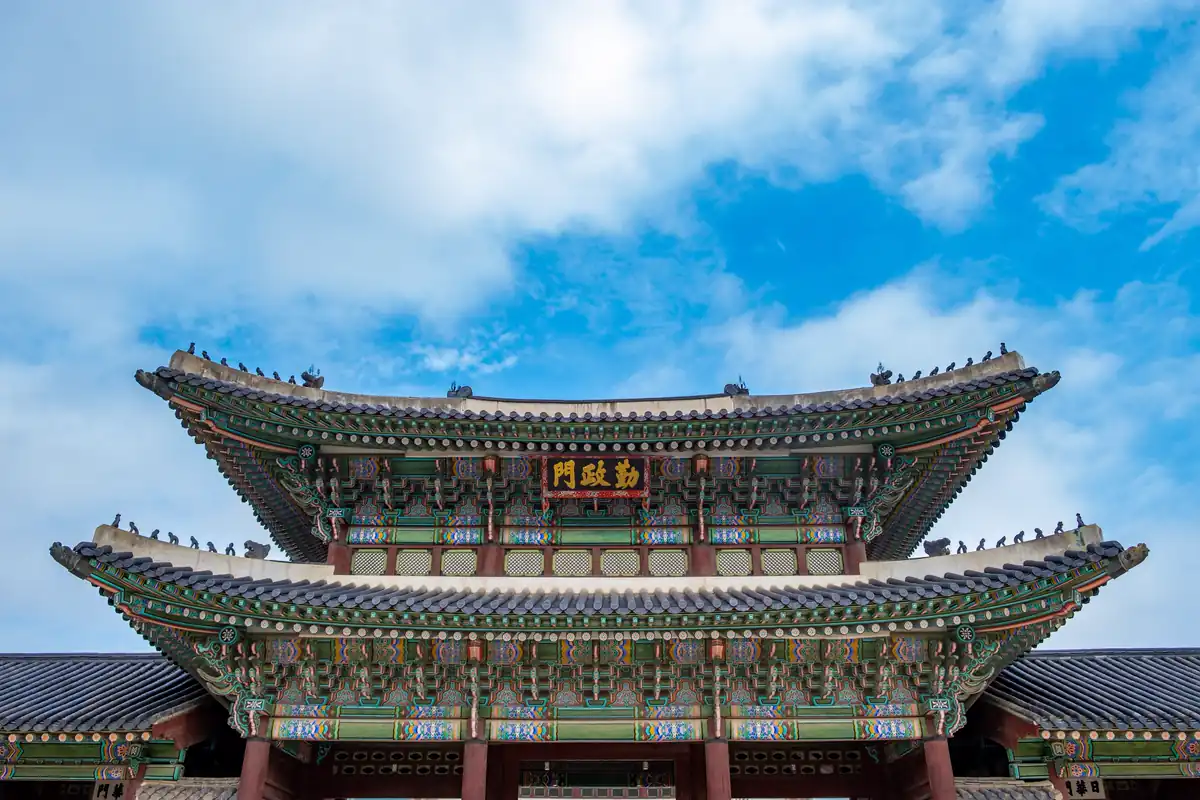
Seeing more palaces is not always the smarter plan
Seoul’s palaces are closer together than many first-time visitors expect. On a map, it can seem easy enough to move from one to another without losing too much time. That often leads to the same early thought: if they are all fairly close, why not try to see several in one day?
It is not an unreasonable idea. In pure travel terms, it can be done. But possible and recommended are not the same thing. Even Koreans usually do not spend an entire day rushing from palace to palace. A palace is not the kind of place that becomes more meaningful just because you checked off more of them. What tends to stay with people longer is not the number of palaces they saw, but how well one palace fit the mood of the day and the area around it.
That is the more useful shift to make. The real question is not which palace is the most famous. It is whether you want the palace to be the main point of the day, or whether you want a palace that fits naturally into the route you already have.
If you only want a short stop, the nearest palace can be the right choice
People who care deeply about palaces will often tell you that each one has its own meaning, atmosphere, and character. That is true. Gyeongbokgung, Deoksugung, the Changdeokgung-Changgyeonggung-Jongmyo area, and Gyeonghuigung all leave different impressions.
But not every traveler wants the same depth from the experience. Some days are built for a short stop, a few photos, and a quick sense of place before moving on. In that case, it does not always make sense to chase the most famous palace or the one that sounds best on paper. Sometimes the better choice is simply the palace that fits most naturally into where you already are.
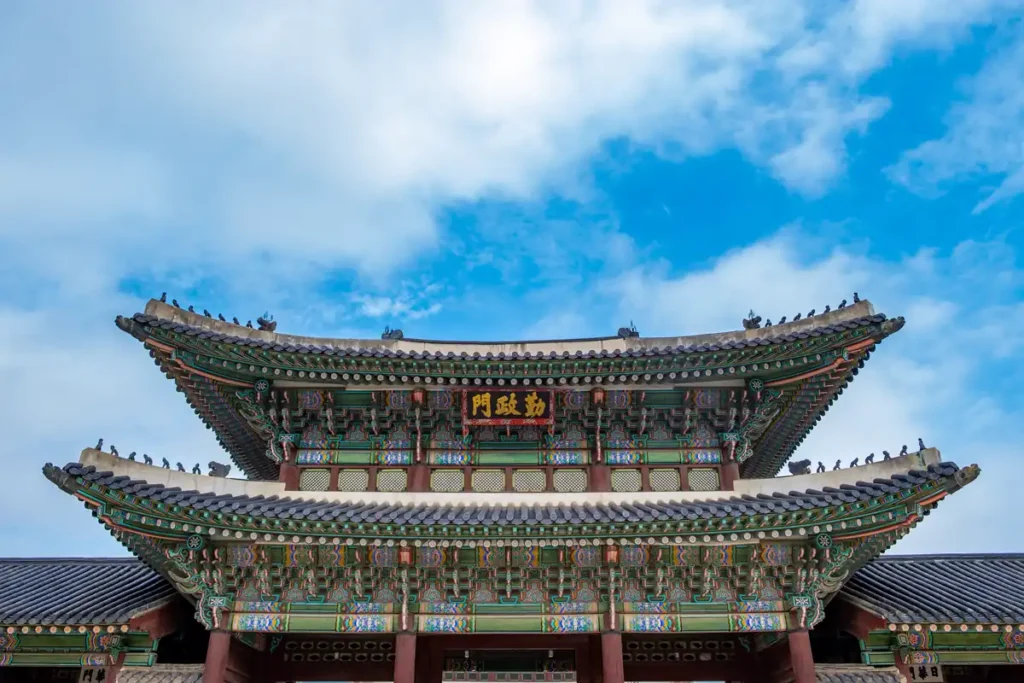
That may sound too practical, but it often works. If you are only spending a short time there, the finer differences between palaces may not be what you remember most anyway. What often stays with you is the larger impression that you stood inside a royal space in Seoul. For a short visit, that symbolic feeling can matter more than the detailed differences between one palace and another.
So a palace does not need to be deep or exhaustive to be worthwhile. If you only want a brief visit, choosing the nearest palace can be one of the smarter decisions of the day.
Start by deciding whether the palace is the point of the day
There are usually two useful ways to build a palace visit in Seoul.
The first is to make the palace itself the center of the day. When you do that, you are not only seeing the buildings. You are also paying attention to the surrounding streets, the pace of the area, the neighborhood mood, and the way the palace changes the whole shape of the day. In that version, the palace is not just a stop. It becomes the theme of the route.
The second is to fit a palace into an itinerary that already exists. In that version, the palace is not the destination so much as the place that changes the tone of your day for a while. You might add Deoksugung while walking through central Seoul, or put Gyeongbokgung into a Bukchon and Seochon route. When a palace is working this way, its value often depends less on historical depth and more on how naturally it connects to what comes next.
That is why choosing a palace in Seoul gets easier once you stop asking which one is best in the abstract. It usually becomes much clearer once you ask whether the palace is meant to lead the day or simply enrich it.
In practice, Seoul’s palaces work better as four route clusters
Although Seoul is often introduced through five major palaces, travelers usually get more practical value by thinking in terms of four route clusters instead.
1. The Gyeongbokgung cluster: the central first-time Seoul route
Gyeongbokgung is the most symbolic palace in Seoul. For many first-time visitors, it is the palace that makes Seoul feel immediately recognizable. It also connects naturally to some of the most familiar first-time routes in the city, including Gwanghwamun, Bukchon, Seochon, and Samcheong-dong.
This is one of its biggest strengths. Gyeongbokgung rarely feels isolated. It usually opens into a larger day that already makes sense to visitors. That makes it especially useful if you are seeing central Seoul for the first time and want one palace that fits a broad, classic route.
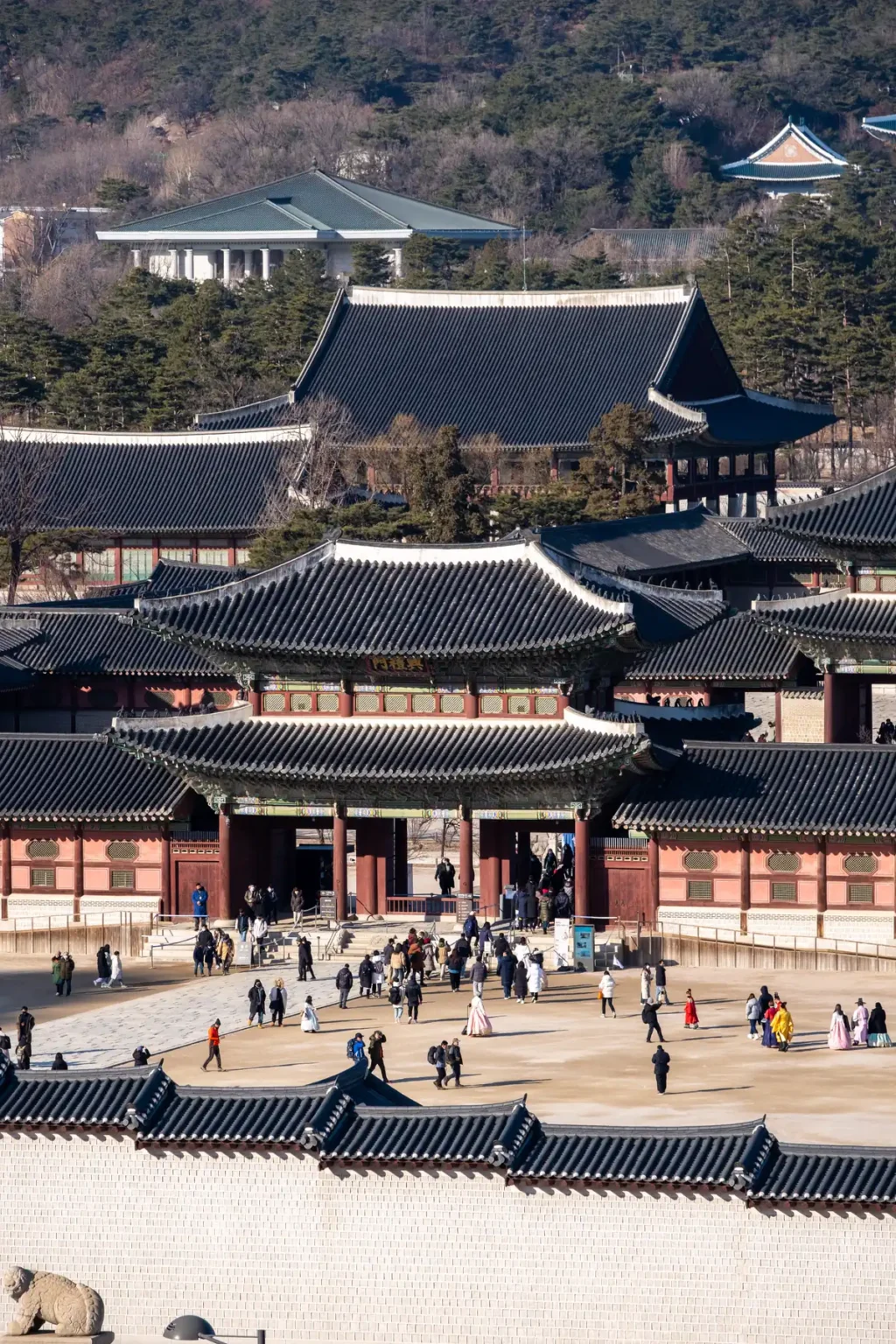
Gyeongbokgung usually works best on days like these:
- your first full day in Seoul
- a day when you want a strong classic first impression
- a route that includes Bukchon, Seochon, or Samcheong-dong
- a day when you want the palace to feel iconic and easy to understand
If what you want is a palace that anchors the most recognizable version of central Seoul, Gyeongbokgung is usually the strongest fit.
2. The Changdeokgung-Changgyeonggung-Jongmyo cluster: a quieter eastern Jongno day
This group works best when treated as one area rather than three separate stops. Changdeokgung tends to feel deeper and more organic in mood. Changgyeonggung often feels quieter and more restrained. Jongmyo adds another layer by grounding the area in royal ritual and memory rather than palace space alone.
What makes this cluster especially strong is what surrounds it. This is not only about the palaces themselves. It is also about the older texture of eastern Jongno. Once you leave the grounds, it becomes easier to connect the experience to older streets, traditional markets, aging shopfronts, and a part of Seoul that can still feel lived-in rather than polished for visitors. That is why this area often works so well for travelers who want more than a classic landmark photo.
This cluster usually works best on days like these:
- you want a quieter and slower palace experience
- you want to connect palace space with older local Seoul
- you like traditional markets and the rougher texture of old Jongno
- you want royal atmosphere and real local streets in the same day
This is the cluster for travelers who want palace depth, older city texture, traditional market energy, and a more local feeling route.
3. The Deoksugung cluster: the practical downtown route with Myeongdong and art
Deoksugung is often the most practical palace in Seoul. It fits well with City Hall, Jeongdong-gil, Myeongdong, and the Seoul Museum of Art. That makes it easy to add to a downtown itinerary without bending the day too far out of shape.
This is what makes Deoksugung different. It does not always ask for a palace-centered day. Instead, it often works best as the palace that slips naturally into a city day you were already going to have. It can be a break from shopping, a slower moment during a walk, or the cultural part of a route that also includes museums and central Seoul streets.
Deoksugung usually works best on days like these:
- you want to include a palace during a Myeongdong or downtown route
- you want something that pairs well with Jeongdong-gil and nearby museums
- you do not have much time but still want one palace experience
- you want a palace that feels easy rather than demanding
Deoksugung is often the easiest palace to fold into a central Seoul day without forcing the whole schedule around it.
4. The Gyeonghuigung cluster: the western history route with the Seoul Museum of History
Gyeonghuigung can feel quieter and less obvious than the others if you see it on its own. But it becomes much stronger when placed next to the Seoul Museum of History and the broader western historical route. This is not usually the palace people pick first if they want one iconic image of Seoul. It is the palace that starts making more sense once the route around it becomes the point.
That is part of its appeal. On its own, Gyeonghuigung can feel understated. As part of a western history route, that understatement becomes one of its strengths. It often suits travelers who do not need the biggest or most famous palace, and who are more interested in context, breathing room, and a less crowded rhythm.
It usually works best on days like these:
- you want to pair a palace with the Seoul Museum of History
- you are building a western historical route toward Seodaemun
- you want something calmer and less crowded
- you prefer a palace that works as part of a wider historical day
Gyeonghuigung is not the most obvious first palace, but it can be a very good palace once the route around it becomes the real attraction.
Why the next stop matters so much
This is the part many palace guides skip. A palace does not always land with the same force for every traveler. For some people, it becomes one of the most memorable and symbolic parts of Seoul. For others, especially at first, it can feel like a quiet old space that is harder to read than expected. That is not a wrong reaction. If you do not care much about court history or cannot yet tell the palaces apart, that distance can be completely normal.
That is exactly why the next stop matters. A palace does not need to carry the whole day by itself. In practice, a palace often works better when it is paired with something you already know you enjoy. If hanok alleys and slower neighborhood walks appeal to you, Gyeongbokgung can open naturally into Bukchon or Seochon. If you care more about art and museum visits, Deoksugung and the Seoul Museum of Art often make more sense together. If you enjoy historical exhibitions, Gyeonghuigung and the Seoul Museum of History create a more complete day. If what you want is a quieter royal mood with older market streets and a more local texture, the Changdeokgung-Changgyeonggung-Jongmyo area usually gives you more to hold onto.
You do not have to be fully moved by the palace alone for the day to work. If what comes next suits your taste, the palace often starts making more sense as part of the day. That is often enough to make the whole route feel better balanced and easier to remember.
In Seoul, a well-matched palace usually matters more than a longer palace list
Seoul’s palaces may be close enough to combine, but that does not mean a longer palace list automatically creates a better day. Palaces are not the kind of attraction that improve just because you collected more of them. They tend to stay with people when the atmosphere fits the day, the surrounding area makes sense, and the next stop helps the experience settle properly.
So the more useful question is not which palace is the most famous. It is whether you want the palace to be the main point of the day, or whether you want a palace that fits naturally into your route.
Once that becomes clear, the next question gets much easier. If this is your first time in Seoul, which palace cluster actually makes the best first choice?